Word Explanation
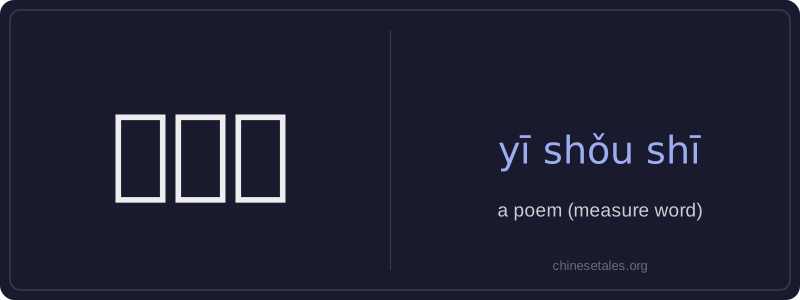
'Yī shǒu shī' literally means 'one head of poem'—a fixed noun phrase used to count poems in Chinese. Unlike English, which uses the neutral measure word 'a', Chinese requires a specific classifier: 'shǒu' (head) is the standard, traditional classifier for poems, songs, and musical compositions. The character 'shī' means 'poem' or 'verse', while 'yī' simply indicates the number one. Together, the phrase functions as a complete noun unit meaning 'a poem'—not just any poem, but one discrete, self-contained poetic work.
This expression appears frequently in literary contexts, language classrooms, and everyday speech when referring to poetry—whether reading, writing, reciting, or appreciating it. It's grammatically required: you cannot say *'yī shī'*; 'shǒu' must accompany 'shī' when counting. Though 'shǒu' can classify other artistic works (e.g., yī shǒu gē—a song), with 'shī' it carries no ambiguity—it always refers to a poem. Learners should treat 'yī shǒu shī' as a single lexical chunk rather than three separate words.
Example Sentences
Related Words
国语
‘Guó yǔ’ literally means 'national language'—
面条
‘面条’ (miàn tiáo) literally means ‘flour str
无论谁
‘无论谁’ (wú lùn shéi) is a pronoun meaning
不对
不对 (bù duì) literally combines 不 (bù), meani
外语
‘外语’ literally means ‘outside language’ —
认同
‘认同’ (tóng rèn) is a verb meaning ‘to ident
中学
'Zhōngxué' literally combines 'zhōng' (middle)
背后
背后 literally means 'back + behind' and functions