Word Explanation
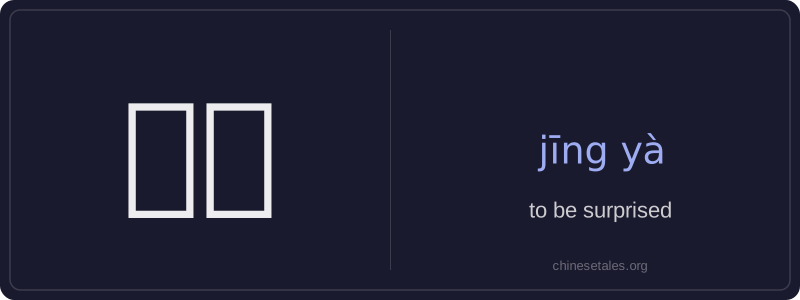
惊讶 (jīng yà) is a verb meaning 'to be surprised' or 'to feel astonishment'. It combines two characters, both carrying the sense of sudden emotional reaction: 惊 (jīng) means 'to startle' or 'to be shocked', often implying an abrupt, intense reaction—like jumping at a loud noise; 讶 (yà) means 'to wonder' or 'to find something unexpected', suggesting intellectual curiosity or mild disbelief. Together, they form a balanced, commonly used compound that expresses a clear, conscious feeling of surprise—not fear, not anger, but genuine astonishment at something unforeseen or out of the ordinary.
This word is neutral in register and appears frequently in spoken and written Chinese, especially when describing reactions to news, discoveries, or unusual behavior. It can function as a predicate verb ('He was surprised') or appear in descriptive phrases like '惊讶的表情' (a surprised expression). Unlike some emotion words, it rarely stands alone as an interjection—it usually requires a subject and context to convey who is surprised and why.
Example Sentences
Related Words
国语
‘Guó yǔ’ literally means 'national language'—
面条
‘面条’ (miàn tiáo) literally means ‘flour str
无论谁
‘无论谁’ (wú lùn shéi) is a pronoun meaning
不对
不对 (bù duì) literally combines 不 (bù), meani
外语
‘外语’ literally means ‘outside language’ —
认同
‘认同’ (tóng rèn) is a verb meaning ‘to ident
中学
'Zhōngxué' literally combines 'zhōng' (middle)
背后
背后 literally means 'back + behind' and functions