Word Explanation
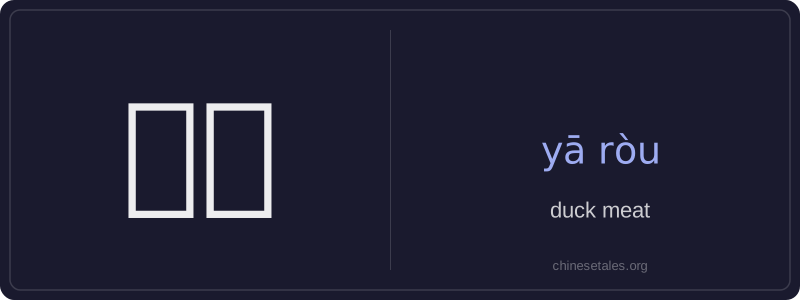
‘鸭肉’ literally means ‘duck meat’—a compound noun formed by combining 鸭 (yā), meaning ‘duck’, and 肉 (ròu), meaning ‘meat’. It refers specifically to the edible flesh of domestic ducks, commonly used in Chinese cuisine. Unlike English, where ‘duck’ alone can mean either the animal or its meat depending on context, Chinese requires the explicit addition of 肉 to indicate the food item. This pattern applies to many meats: e.g., 猪肉 (zhūròu, pork), 牛肉 (niúròu, beef).
鸭肉 is valued for its rich flavor and tender texture, often featured in braised dishes, soups, or roasted preparations like Peking duck. It appears frequently on restaurant menus, in cooking instructions, and grocery labels. While not as ubiquitous as pork or chicken in everyday meals, it holds cultural significance in regional cuisines—especially in Jiangsu, Zhejiang, and Beijing—and is sometimes associated with nourishment and warmth in traditional dietary concepts.
Example Sentences
Related Words
国语
‘Guó yǔ’ literally means 'national language'—
面条
‘面条’ (miàn tiáo) literally means ‘flour str
无论谁
‘无论谁’ (wú lùn shéi) is a pronoun meaning
不对
不对 (bù duì) literally combines 不 (bù), meani
外语
‘外语’ literally means ‘outside language’ —
认同
‘认同’ (tóng rèn) is a verb meaning ‘to ident
中学
'Zhōngxué' literally combines 'zhōng' (middle)
背后
背后 literally means 'back + behind' and functions