Word Explanation
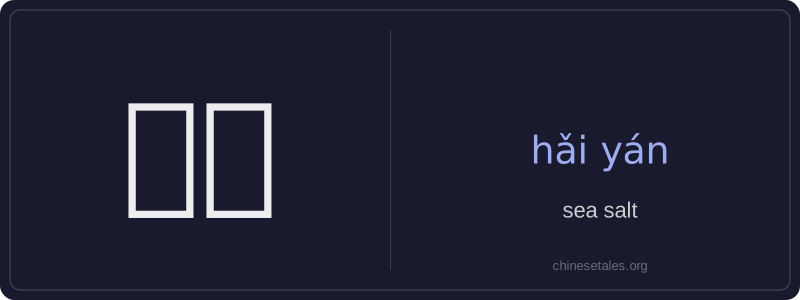
‘海盐’ (hǎi yán) literally means ‘sea salt’ — a compound noun formed by combining 海 (hǎi), meaning ‘sea’, and 盐 (yán), meaning ‘salt’. It refers specifically to salt obtained by evaporating seawater, often valued for its trace minerals and coarser texture compared to refined table salt. Unlike industrial or iodized salt, sea salt is commonly associated with natural, artisanal, or gourmet food preparation.
In daily usage, 海盐 appears in cooking contexts (e.g., seasoning, finishing dishes), health and wellness discussions (e.g., mineral content), and product labeling (e.g., skincare or bath salts). It’s neutral in register — appropriate in both casual conversation and formal writing — and functions exclusively as a noun, never as a verb or adjective. While it shares the character 盐 with other salt-related terms, the prefix 海 clearly distinguishes its marine origin.
Example Sentences
Related Words
国语
‘Guó yǔ’ literally means 'national language'—
面条
‘面条’ (miàn tiáo) literally means ‘flour str
无论谁
‘无论谁’ (wú lùn shéi) is a pronoun meaning
不对
不对 (bù duì) literally combines 不 (bù), meani
外语
‘外语’ literally means ‘outside language’ —
认同
‘认同’ (tóng rèn) is a verb meaning ‘to ident
中学
'Zhōngxué' literally combines 'zhōng' (middle)
背后
背后 literally means 'back + behind' and functions