Word Explanation
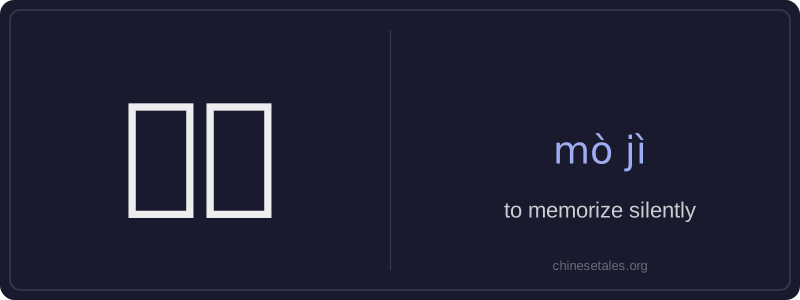
默记 (mò jì) is a verb meaning 'to memorize silently'—that is, to commit something to memory without speaking it aloud. The first character 默 (mò) means 'silent' or 'mute', and the second character 记 (jì) means 'to remember' or 'to record'. Together, they emphasize internal, quiet mental rehearsal rather than vocal repetition. This method is commonly used in academic settings, language learning, or when preparing for speeches or exams where silent review is practical or necessary.
Unlike rote recitation, 默记 implies focused concentration and mental retention without external articulation. It’s often contrasted with 朗读 (lǎngdú, 'reading aloud') or 背诵 (bèisòng, 'reciting from memory'). Learners frequently use 默记 when studying vocabulary, formulas, or historical dates—especially in quiet environments like libraries or before tests. The word carries a slightly formal or literary tone and appears more often in written Chinese or educational contexts than in casual speech.
Example Sentences
Related Words
国语
‘Guó yǔ’ literally means 'national language'—
面条
‘面条’ (miàn tiáo) literally means ‘flour str
无论谁
‘无论谁’ (wú lùn shéi) is a pronoun meaning
不对
不对 (bù duì) literally combines 不 (bù), meani
外语
‘外语’ literally means ‘outside language’ —
认同
‘认同’ (tóng rèn) is a verb meaning ‘to ident
中学
'Zhōngxué' literally combines 'zhōng' (middle)
背后
背后 literally means 'back + behind' and functions