Word Explanation
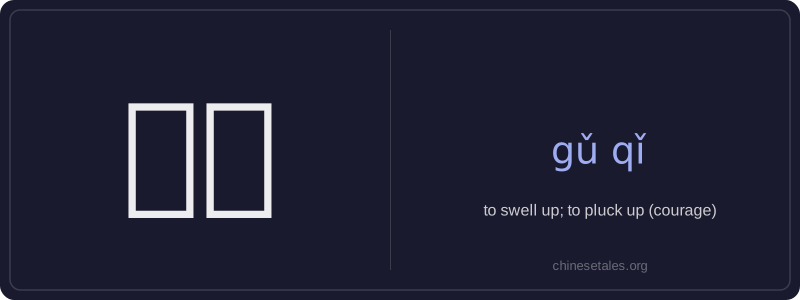
鼓起 (gǔ qǐ) is a verb meaning 'to swell up' literally or 'to pluck up (courage, strength, determination)' figuratively. The character 鼓 originally means 'drum', but as a verb it carries the sense of 'to inflate', 'to stir up', or 'to encourage'; 起 means 'to rise' or 'to begin'. Together, 鼓起 conveys an upward, activating motion — whether physical swelling (e.g., a muscle or wound) or psychological activation (e.g., gathering resolve before speaking). It’s commonly used in both concrete and abstract contexts, especially where effort or inner energy is mustered.
This compound often appears in written and spoken Mandarin to describe intentional mental or physical intensification. It frequently follows subjects indicating people or body parts (e.g., 勇气, 脸颊, 勇气, 肌肉), and usually takes the structure [Subject] + 鼓起 + [Object]. Unlike simple verbs like 起 or 鼓 alone, 鼓起 emphasizes purposeful, dynamic emergence — not passive rising, but active summoning.
Example Sentences
Related Words
国语
‘Guó yǔ’ literally means 'national language'—
面条
‘面条’ (miàn tiáo) literally means ‘flour str
无论谁
‘无论谁’ (wú lùn shéi) is a pronoun meaning
不对
不对 (bù duì) literally combines 不 (bù), meani
外语
‘外语’ literally means ‘outside language’ —
认同
‘认同’ (tóng rèn) is a verb meaning ‘to ident
中学
'Zhōngxué' literally combines 'zhōng' (middle)
背后
背后 literally means 'back + behind' and functions