Word Explanation
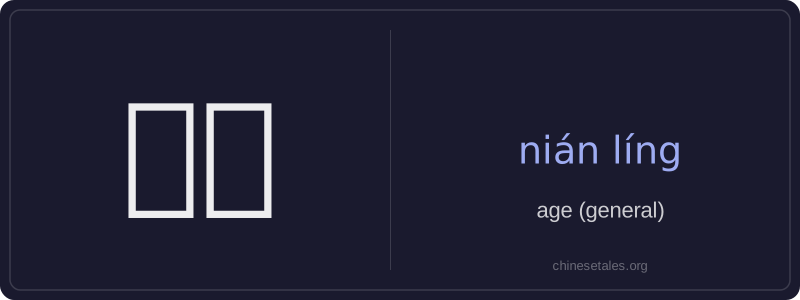
年龄 (nián líng) is a compound noun meaning 'age'—specifically the number of years a person or animal has lived. It combines 年 (nián), meaning 'year', and 龄 (líng), a formal character meaning 'age' or 'years of life', often used in official, medical, or academic contexts. Unlike colloquial alternatives like 岁 (suì), which is used after numbers (e.g., 五岁), 年龄 functions as a standalone noun and appears in questions (e.g., 你年龄多大?), documents (e.g., 身份证上的年龄), and formal speech.
This term is neutral and widely appropriate across registers—from school forms to veterinary records—but is rarely used in casual conversation among friends. It can refer to humans or animals, though for pets or livestock, it’s common in care instructions or breeding contexts. Because it’s a countable noun, it’s often paired with measure words like '这个' or '那个', or quantifiers like '多少' (how many) or '具体' (specific). It does not take aspect markers (e.g., 了, 过) or verbal complements, reinforcing its nominal nature.
Example Sentences
Related Words
国语
‘Guó yǔ’ literally means 'national language'—
面条
‘面条’ (miàn tiáo) literally means ‘flour str
无论谁
‘无论谁’ (wú lùn shéi) is a pronoun meaning
不对
不对 (bù duì) literally combines 不 (bù), meani
外语
‘外语’ literally means ‘outside language’ —
认同
‘认同’ (tóng rèn) is a verb meaning ‘to ident
中学
'Zhōngxué' literally combines 'zhōng' (middle)
背后
背后 literally means 'back + behind' and functions