Word Explanation
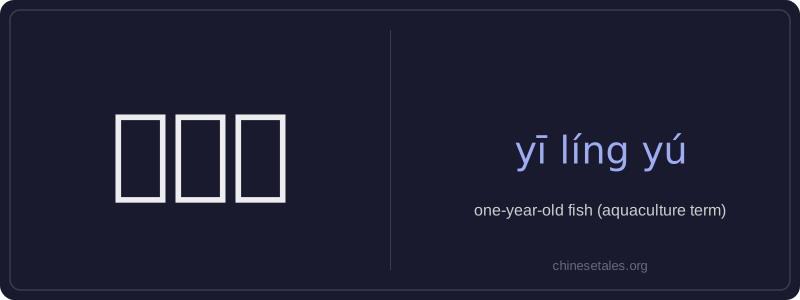
'Yī líng yú' literally means 'one-year-old fish' and is a technical term used primarily in aquaculture and fisheries science. The character 一 (yī) means 'one', 龄 (líng) means 'age' or 'year of life', and 鱼 (yú) means 'fish'. Together, they denote fish that have completed one full growing season—typically from hatching to the end of their first calendar year—and are often at a critical stage for stocking, grading, or disease monitoring.
This term is not used for wild fish in casual speech but appears frequently in farming reports, government regulations, hatchery logs, and research papers. Age classification by 'ling' (e.g., 二龄鱼, 三龄鱼) helps standardize growth tracking across species like carp, tilapia, or salmonids. It reflects biological development rather than exact chronological age, as hatching timing and water temperature affect growth rates.
Example Sentences
Related Words
国语
‘Guó yǔ’ literally means 'national language'—
面条
‘面条’ (miàn tiáo) literally means ‘flour str
无论谁
‘无论谁’ (wú lùn shéi) is a pronoun meaning
不对
不对 (bù duì) literally combines 不 (bù), meani
外语
‘外语’ literally means ‘outside language’ —
认同
‘认同’ (tóng rèn) is a verb meaning ‘to ident
中学
'Zhōngxué' literally combines 'zhōng' (middle)
背后
背后 literally means 'back + behind' and functions