Word Explanation
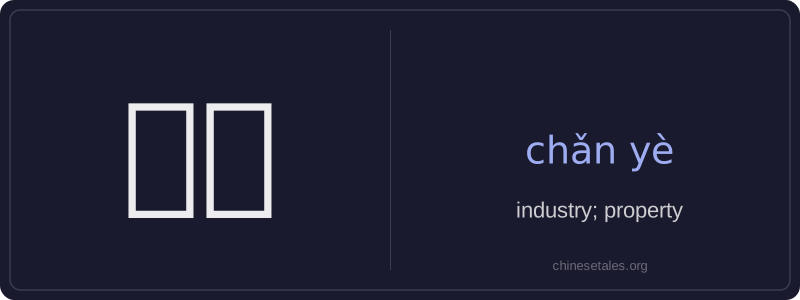
产业 (chǎn yè) is a noun with two primary meanings: 'industry' (as in economic sectors like manufacturing, agriculture, or technology) and 'property' or 'assets' (especially in formal or legal contexts). The character 产 (chǎn) means 'to produce' or 'product,' while 业 (yè) means 'occupation,' 'business,' or 'undertaking.' Together, they convey the idea of productive activity or established assets — reflecting both economic function and ownership. In modern usage, 产业 most commonly refers to broad industrial sectors (e.g., 'the tourism industry') or collectively owned enterprises.
The word carries a formal, often institutional tone and appears frequently in policy documents, news reports, and business discussions. It’s rarely used in casual speech for personal possessions — for everyday 'property,' people prefer words like 房子 (house) or 财产 (cái chǎn, 'property' in the legal sense). When referring to industries, 产业 is typically paired with modifiers like 旅游 (tourism), 高科技 (high-tech), or 农村 (rural), forming compound terms like 旅游业 or 高科技产业.
Example Sentences
Related Words
国语
‘Guó yǔ’ literally means 'national language'—
面条
‘面条’ (miàn tiáo) literally means ‘flour str
无论谁
‘无论谁’ (wú lùn shéi) is a pronoun meaning
不对
不对 (bù duì) literally combines 不 (bù), meani
外语
‘外语’ literally means ‘outside language’ —
认同
‘认同’ (tóng rèn) is a verb meaning ‘to ident
中学
'Zhōngxué' literally combines 'zhōng' (middle)
背后
背后 literally means 'back + behind' and functions