Word Explanation
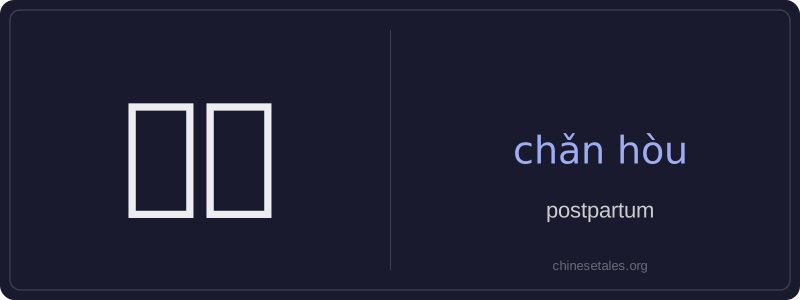
'Chǎn hòu' literally means 'after childbirth' — 产 (chǎn) means 'to give birth' or 'childbirth', and 后 (hòu) means 'after' or 'behind'. Together, they form a compound noun referring specifically to the period following delivery, typically the first six weeks after giving birth. This term is widely used in medical, maternal health, and traditional Chinese medicine contexts.
In daily usage, 'chǎn hòu' often modifies nouns to describe conditions, care, symptoms, or recovery stages related to new mothers — for example, 产后抑郁 (postpartum depression), 产后护理 (postpartum care), or 产后恢复 (postpartum recovery). It carries a formal yet common register and is rarely used outside health-related discussions. Unlike English 'postpartum', which can function as an adjective or noun, in Chinese 产后 almost always functions as a noun or attributive noun (e.g., 产后阶段), not as a standalone predicate.
Example Sentences
Related Words
国语
‘Guó yǔ’ literally means 'national language'—
面条
‘面条’ (miàn tiáo) literally means ‘flour str
无论谁
‘无论谁’ (wú lùn shéi) is a pronoun meaning
不对
不对 (bù duì) literally combines 不 (bù), meani
外语
‘外语’ literally means ‘outside language’ —
认同
‘认同’ (tóng rèn) is a verb meaning ‘to ident
中学
'Zhōngxué' literally combines 'zhōng' (middle)
背后
背后 literally means 'back + behind' and functions