Word Explanation
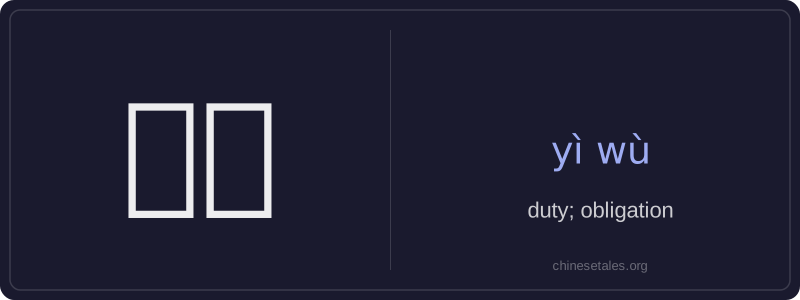
'义务' (yìwù) is a noun meaning 'duty' or 'obligation'—a moral, legal, or social responsibility that one is expected to fulfill. The first character 义 (yì) means 'righteousness', 'justice', or 'moral principle', while 务 (wù) means 'task', 'affair', or 'matter'. Together, they convey the idea of a morally or socially required task—not something optional, but something one *ought* to do based on role, law, or shared values.
This word appears frequently in formal and semi-formal contexts: civic life (e.g., tax payment, military service), family roles (e.g., caring for aging parents), professional ethics, and education. It carries a sense of seriousness and expectation, often implying consequences if neglected. Unlike the more personal or emotional term 责任 (zérèn, 'responsibility'), 义务 emphasizes duty rooted in external standards—laws, customs, or institutional norms—and is commonly used in official documents, news reports, and public discourse.
Example Sentences
Related Words
国语
‘Guó yǔ’ literally means 'national language'—
面条
‘面条’ (miàn tiáo) literally means ‘flour str
无论谁
‘无论谁’ (wú lùn shéi) is a pronoun meaning
不对
不对 (bù duì) literally combines 不 (bù), meani
外语
‘外语’ literally means ‘outside language’ —
认同
‘认同’ (tóng rèn) is a verb meaning ‘to ident
中学
'Zhōngxué' literally combines 'zhōng' (middle)
背后
背后 literally means 'back + behind' and functions