Word Explanation
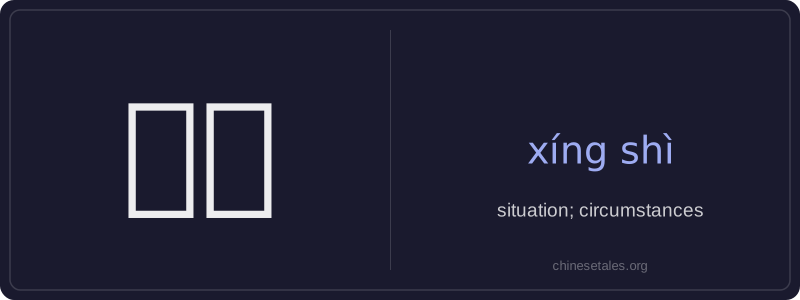
‘形势’ (xíng shì) literally combines ‘形’ (xíng), meaning ‘form’ or ‘appearance’, and ‘势’ (shì), meaning ‘trend’, ‘momentum’, or ‘force’. Together, they refer to the overall state or configuration of a situation — not just facts, but how things are developing, what pressures exist, and what direction things seem to be heading. It implies dynamism and context: a military commander assesses battlefield 形势; an investor monitors market 形势; a student might worry about exam 形势.
This word is formal and commonly used in news reports, policy discussions, business analysis, and strategic planning. It carries a sense of objectivity and gravity — rarely used for trivial or personal daily matters (e.g., you wouldn’t say ‘今天早餐的形势很紧张’). It often appears with verbs like ‘分析’ (analyze), ‘判断’ (judge), ‘改变’ (change), or ‘恶化/好转’ (worsen/improve), emphasizing evaluation or response to unfolding conditions.
Example Sentences
Related Words
国语
‘Guó yǔ’ literally means 'national language'—
面条
‘面条’ (miàn tiáo) literally means ‘flour str
无论谁
‘无论谁’ (wú lùn shéi) is a pronoun meaning
不对
不对 (bù duì) literally combines 不 (bù), meani
外语
‘外语’ literally means ‘outside language’ —
认同
‘认同’ (tóng rèn) is a verb meaning ‘to ident
中学
'Zhōngxué' literally combines 'zhōng' (middle)
背后
背后 literally means 'back + behind' and functions