Word Explanation
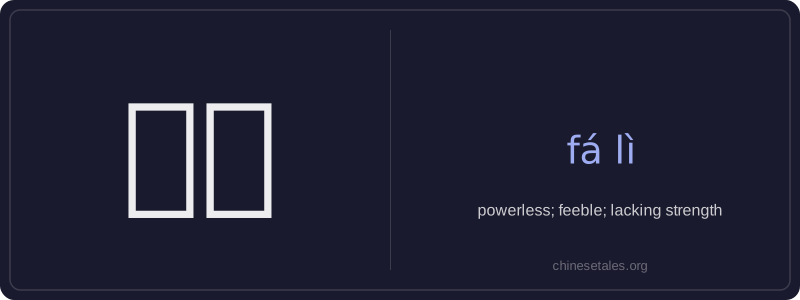
'乏力' (fá lì) literally combines '乏' (fá), meaning 'lacking' or 'insufficient', and '力' (lì), meaning 'strength' or 'power'. Together, they form an adjective describing a physical state of weakness, exhaustion, or lack of energy — not merely tiredness, but a deeper, often medically noted absence of muscular or vital strength. It frequently appears in clinical contexts, such as symptom reporting or medical diagnoses.
The term carries a neutral-to-formal register and is commonly used by patients describing how they feel ('我最近总是乏力'), doctors documenting signs ('患者主诉乏力两周'), or health-related media discussing conditions like anemia, chronic fatigue, or post-illness recovery. Unlike colloquial terms like '累' (lèi, 'tired'), '乏力' emphasizes objective bodily incapacity rather than subjective weariness — it implies one cannot exert effort even if motivated.
Example Sentences
Related Words
国语
‘Guó yǔ’ literally means 'national language'—
面条
‘面条’ (miàn tiáo) literally means ‘flour str
无论谁
‘无论谁’ (wú lùn shéi) is a pronoun meaning
不对
不对 (bù duì) literally combines 不 (bù), meani
外语
‘外语’ literally means ‘outside language’ —
认同
‘认同’ (tóng rèn) is a verb meaning ‘to ident
中学
'Zhōngxué' literally combines 'zhōng' (middle)
背后
背后 literally means 'back + behind' and functions