Word Explanation
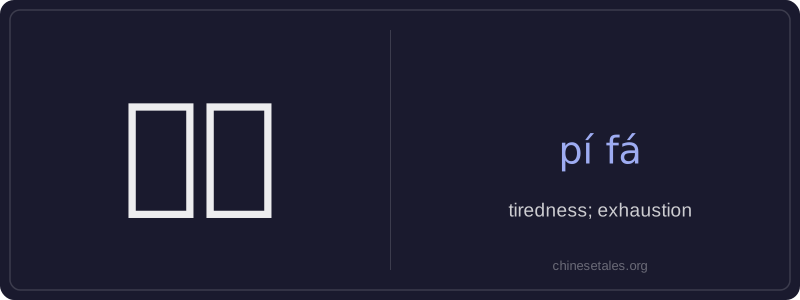
疲乏 is a compound noun meaning 'tiredness' or 'exhaustion' — a physical or mental state of depleted energy. The first character 疲 (pí) means 'weary' or 'fatigued', often implying prolonged effort; the second 乏 (fá) means 'lacking' or 'insufficient', reinforcing the sense of depletion. Together, they form a formal, slightly literary term that emphasizes deep or sustained weariness — more intense than just feeling 'tired' (累). It’s commonly used in medical contexts, health discussions, and written reports.
Unlike colloquial terms like 累 or 困, 疲乏 carries a clinical or descriptive tone and appears frequently in doctor-patient communication, health articles, or official wellness guidelines. It rarely functions as a verb or adjective on its own and almost always appears as a standalone noun or after modifiers like 感到, 出现, or 严重. It does not take aspect markers (e.g., 了, 过) directly and is seldom used in casual speech among friends.
Example Sentences
Related Words
国语
‘Guó yǔ’ literally means 'national language'—
面条
‘面条’ (miàn tiáo) literally means ‘flour str
无论谁
‘无论谁’ (wú lùn shéi) is a pronoun meaning
不对
不对 (bù duì) literally combines 不 (bù), meani
外语
‘外语’ literally means ‘outside language’ —
认同
‘认同’ (tóng rèn) is a verb meaning ‘to ident
中学
'Zhōngxué' literally combines 'zhōng' (middle)
背后
背后 literally means 'back + behind' and functions