Word Explanation
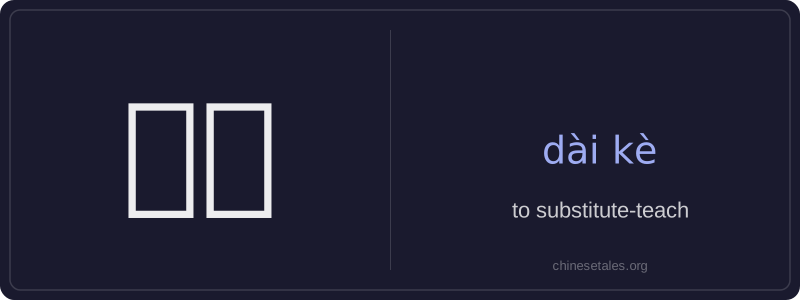
'Dài kè' literally means 'to substitute for a class' — the character 代 (dài) means 'to replace or act on behalf of', and 课 (kè) means 'class' or 'lesson'. Together, they form a verb meaning to temporarily take over teaching duties for another teacher who is absent due to illness, leave, or other reasons. It's commonly used in school, university, and training contexts.
This term emphasizes the temporary, functional nature of the arrangement — the substitute teacher isn’t permanently assigned but fills a specific gap. While often used as a verb ('He will dài kè tomorrow'), it can also function as a noun in phrases like 'dài kè老师' (substitute teacher). The action implies responsibility, preparation, and alignment with the original lesson plan — not just showing up, but delivering instruction effectively.
Example Sentences
Related Words
国语
‘Guó yǔ’ literally means 'national language'—
面条
‘面条’ (miàn tiáo) literally means ‘flour str
无论谁
‘无论谁’ (wú lùn shéi) is a pronoun meaning
不对
不对 (bù duì) literally combines 不 (bù), meani
外语
‘外语’ literally means ‘outside language’ —
认同
‘认同’ (tóng rèn) is a verb meaning ‘to ident
中学
'Zhōngxué' literally combines 'zhōng' (middle)
背后
背后 literally means 'back + behind' and functions