Word Explanation
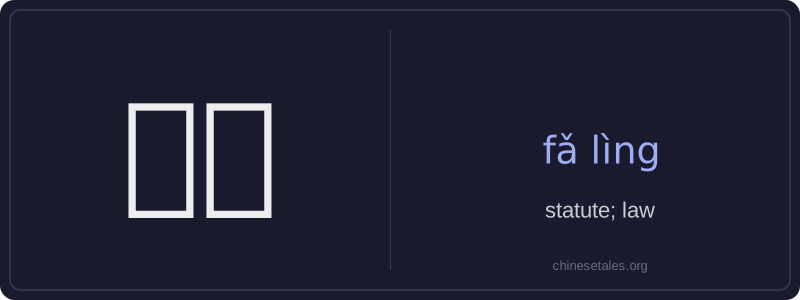
法令 (fǎ lìng) is a formal noun meaning 'statute' or 'law'—a written rule officially enacted by a government or legislative body. The character 法 (fǎ) means 'law', 'method', or 'principle', while 令 (lìng) originally meant 'command' or 'order'; together, they emphasize authoritative, binding legal provisions—not customary practice or moral guidance, but codified rules with enforcement power.
This term appears most often in official, legal, and administrative contexts: government announcements, news reports on legislation, legal documents, and formal speeches. It carries a neutral-to-formal register and is rarely used in casual conversation. 法令 is typically countable (e.g., 一项法令 'a statute') and often modified by adjectives like 新 (xīn, 'new'), 行政 (xíngzhèng, 'administrative'), or 紧急 (jǐnjí, 'emergency'). Unlike broader terms like 法律 (fǎlǜ, 'law' in general), 法令 refers specifically to individual, promulgated enactments.
Example Sentences
Related Words
国语
‘Guó yǔ’ literally means 'national language'—
面条
‘面条’ (miàn tiáo) literally means ‘flour str
无论谁
‘无论谁’ (wú lùn shéi) is a pronoun meaning
不对
不对 (bù duì) literally combines 不 (bù), meani
外语
‘外语’ literally means ‘outside language’ —
认同
‘认同’ (tóng rèn) is a verb meaning ‘to ident
中学
'Zhōngxué' literally combines 'zhōng' (middle)
背后
背后 literally means 'back + behind' and functions