Word Explanation
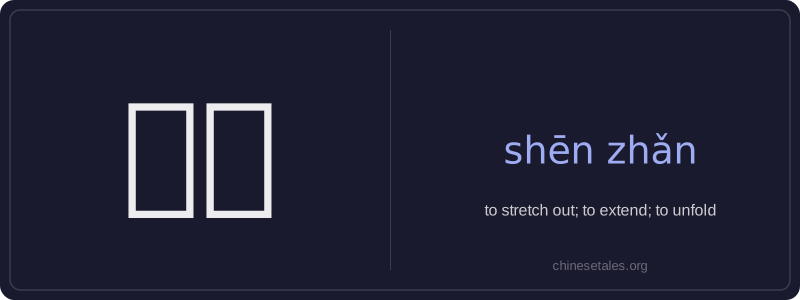
伸展 is a verb meaning 'to stretch out,' 'to extend,' or 'to unfold.' It combines two characters: 伸 (shēn), which means 'to stretch' or 'to reach out,' and 展 (zhǎn), which means 'to unfold,' 'to spread,' or 'to extend.' Together, they emphasize a smooth, deliberate motion of lengthening or opening up the body or an object — often with intention and control. The word carries a sense of physical expansion and release, commonly used in contexts involving bodily movement, flexibility, or spatial extension.
You’ll frequently hear 伸展 in health, fitness, and wellness settings — especially in yoga, tai chi, or morning routines — where it describes controlled stretching to improve circulation and relieve tension. It can also describe non-living things unfolding or extending, like a bird’s wings or a map, though human physical action remains its most frequent usage. Unlike casual verbs like 拉 (lā, 'to pull'), 伸展 implies gentleness, fullness, and conscious effort.
Example Sentences
Related Words
国语
‘Guó yǔ’ literally means 'national language'—
面条
‘面条’ (miàn tiáo) literally means ‘flour str
无论谁
‘无论谁’ (wú lùn shéi) is a pronoun meaning
不对
不对 (bù duì) literally combines 不 (bù), meani
外语
‘外语’ literally means ‘outside language’ —
认同
‘认同’ (tóng rèn) is a verb meaning ‘to ident
中学
'Zhōngxué' literally combines 'zhōng' (middle)
背后
背后 literally means 'back + behind' and functions