Word Explanation
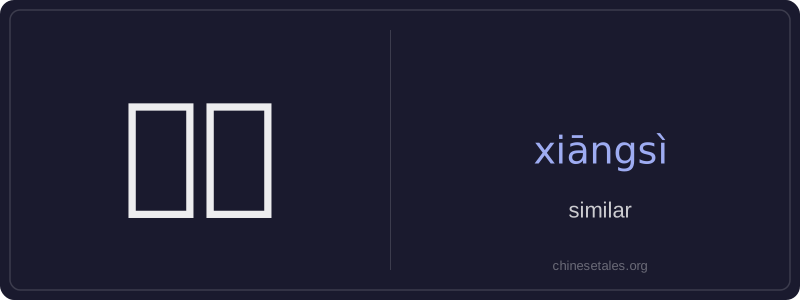
'相似' (xiāngsì) is an adjective meaning 'similar' or 'resembling'—used to describe two or more things that share notable characteristics in appearance, behavior, structure, or function. The first character 相 (xiāng) conveys 'mutual' or 'each other', while 似 (sì) means 'to resemble' or 'to be like'. Together, they form a compound expressing mutual likeness—not identical, but closely alike in key ways. It’s commonly used in comparisons across domains like biology (e.g., species traits), design, language, or personal qualities.
This word typically follows the pattern 'A 和 B 相似' (A and B are similar) or appears after a noun with 的: '相似的特征' (similar features). It’s neutral in register—appropriate in both spoken and written Chinese—and often appears in academic, descriptive, or observational contexts. Unlike the verb 一样 (yíyàng, 'to be the same'), 相似 implies resemblance without claiming identity, making it precise for nuanced comparison.
Example Sentences
Related Words
国语
‘Guó yǔ’ literally means 'national language'—
面条
‘面条’ (miàn tiáo) literally means ‘flour str
无论谁
‘无论谁’ (wú lùn shéi) is a pronoun meaning
不对
不对 (bù duì) literally combines 不 (bù), meani
外语
‘外语’ literally means ‘outside language’ —
认同
‘认同’ (tóng rèn) is a verb meaning ‘to ident
中学
'Zhōngxué' literally combines 'zhōng' (middle)
背后
背后 literally means 'back + behind' and functions