Word Explanation
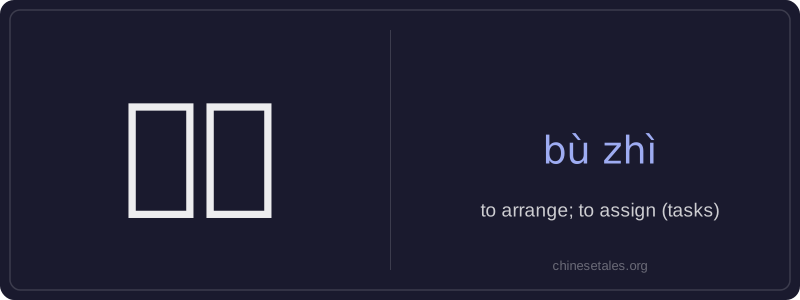
布置 (bù zhì) is a transitive verb meaning 'to arrange' or 'to assign (tasks)'. It combines two characters: 布 (bù), originally meaning 'cloth' but here used in the sense of 'to spread out, to deploy', and 置 (zhì), meaning 'to place, to set, to establish'. Together, they convey the idea of deliberately organizing people, objects, or responsibilities in an orderly or purposeful way. The word emphasizes intentionality and structure — it’s not casual setting-up, but planned arrangement.
It’s commonly used in educational, workplace, and domestic contexts: teachers布置 homework or classroom seating; managers布置 tasks to team members; hosts布置 a dining table or party decorations. It often implies authority or responsibility — the subject usually has the power or duty to organize. Unlike generic verbs like 放 (fàng, 'to put'), 布置 carries a sense of planning and function, and it almost always takes a direct object (e.g., 布置作业, 布置房间).
Example Sentences
Related Words
国语
‘Guó yǔ’ literally means 'national language'—
面条
‘面条’ (miàn tiáo) literally means ‘flour str
无论谁
‘无论谁’ (wú lùn shéi) is a pronoun meaning
不对
不对 (bù duì) literally combines 不 (bù), meani
外语
‘外语’ literally means ‘outside language’ —
认同
‘认同’ (tóng rèn) is a verb meaning ‘to ident
中学
'Zhōngxué' literally combines 'zhōng' (middle)
背后
背后 literally means 'back + behind' and functions