Word Explanation
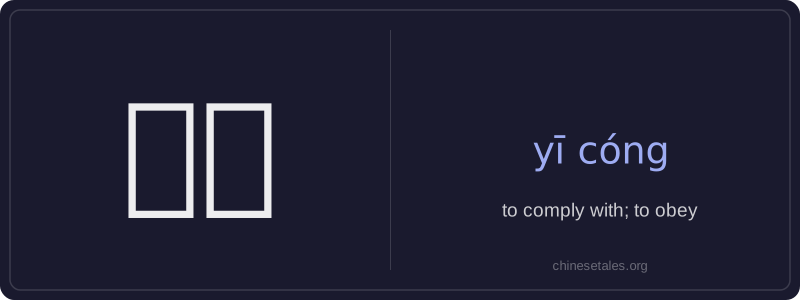
‘依从’ is a formal, written verb meaning ‘to comply with’ or ‘to obey’, often implying willing or respectful adherence to instructions, rules, advice, or authority. The character 依 (yī) means ‘to rely on’ or ‘to follow closely’, while 从 (cóng) means ‘to follow’ or ‘to obey’. Together, they emphasize conformity based on trust, respect, or duty—not mere submission. It’s commonly used in contexts involving guidance from elders, teachers, doctors, or official regulations.
This word carries a tone of conscientiousness and deference; it’s rarely used for forced or reluctant obedience (for which 服从 or 屈服 would be more appropriate). It frequently appears in written Chinese—such as formal notices, health advisories, or educational materials—and less in casual speech, where 听从 or 遵守 are more common. ‘依从’ often co-occurs with abstract nouns like 建议 (advice), 安排 (arrangements), or 医嘱 (doctor’s orders).
Example Sentences
Related Words
国语
‘Guó yǔ’ literally means 'national language'—
面条
‘面条’ (miàn tiáo) literally means ‘flour str
无论谁
‘无论谁’ (wú lùn shéi) is a pronoun meaning
不对
不对 (bù duì) literally combines 不 (bù), meani
外语
‘外语’ literally means ‘outside language’ —
认同
‘认同’ (tóng rèn) is a verb meaning ‘to ident
中学
'Zhōngxué' literally combines 'zhōng' (middle)
背后
背后 literally means 'back + behind' and functions