Word Explanation
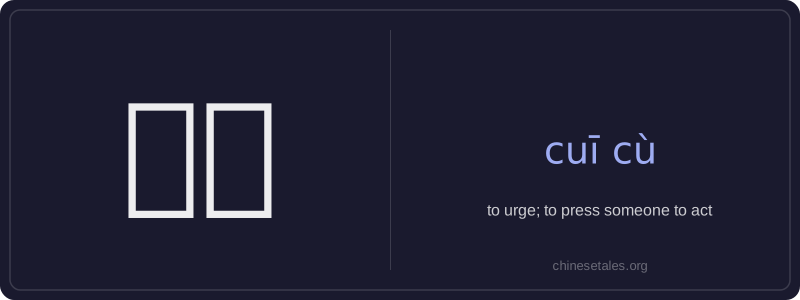
催促 is a verb meaning 'to urge' or 'to press someone to act', often implying gentle but persistent prompting—like reminding someone to finish a task, leave on time, or respond quickly. Both characters carry related meanings: 催 (cuī) means 'to urge, hasten', and 促 (cù) means 'to urge, spur on, or accelerate'. Together, they form a compound verb that emphasizes active encouragement toward timely action, rather than force or command. It’s commonly used in interpersonal contexts—between colleagues, family members, or service providers and clients.
The word suggests polite insistence, not aggression; it’s appropriate in formal and informal settings but carries a slight tone of impatience if overused. You’ll often see it with objects like 交报告 (submit a report), 动身 (set off), or 回复 (reply). Unlike stronger verbs like 强迫 (to force) or 命令 (to order), 催促 preserves relational harmony while conveying urgency.
Example Sentences
Related Words
国语
‘Guó yǔ’ literally means 'national language'—
面条
‘面条’ (miàn tiáo) literally means ‘flour str
无论谁
‘无论谁’ (wú lùn shéi) is a pronoun meaning
不对
不对 (bù duì) literally combines 不 (bù), meani
外语
‘外语’ literally means ‘outside language’ —
认同
‘认同’ (tóng rèn) is a verb meaning ‘to ident
中学
'Zhōngxué' literally combines 'zhōng' (middle)
背后
背后 literally means 'back + behind' and functions