Word Explanation
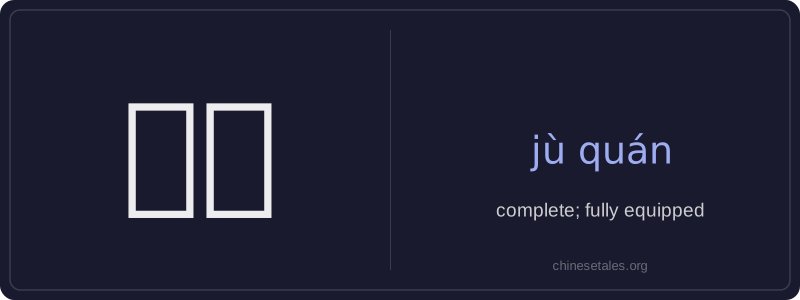
俱全 is an adjective meaning 'complete' or 'fully equipped', emphasizing that every necessary element or item is present without exception. The character 俱 (jù) means 'all' or 'together', while 全 (quán) means 'entire', 'whole', or 'complete'. Together, they form a compact, literary-sounding compound expressing thoroughness and comprehensiveness — often used in formal writing, product descriptions, or official announcements rather than casual speech.
This term frequently appears in contexts describing well-equipped facilities (e.g., hotels, hospitals), comprehensive services (e.g., insurance plans), or fully stocked inventories. It conveys reliability and readiness: if something is 俱全, nothing essential is missing. Though grammatically adjectival, 俱全 typically follows the noun it modifies (e.g., 设施俱全) or appears after 是 or 很 in predicative use (e.g., 这里设备很俱全 is *incorrect* — see usage note). It rarely stands alone and almost never takes aspect particles like 了 or 过.
Example Sentences
Related Words
国语
‘Guó yǔ’ literally means 'national language'—
面条
‘面条’ (miàn tiáo) literally means ‘flour str
无论谁
‘无论谁’ (wú lùn shéi) is a pronoun meaning
不对
不对 (bù duì) literally combines 不 (bù), meani
外语
‘外语’ literally means ‘outside language’ —
认同
‘认同’ (tóng rèn) is a verb meaning ‘to ident
中学
'Zhōngxué' literally combines 'zhōng' (middle)
背后
背后 literally means 'back + behind' and functions