Word Explanation
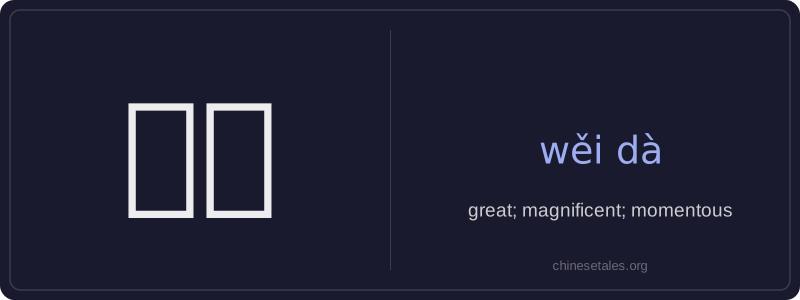
伟大 (wěi dà) is an adjective meaning 'great', 'magnificent', or 'momentous' — used to describe people, deeds, achievements, or concepts of exceptional significance, virtue, or scale. The character 伟 (wěi) conveys 'imposing', 'outstanding', or 'heroic', while 大 (dà) means 'big' or 'grand'; together, they intensify the sense of greatness beyond ordinary size or status — often carrying moral weight and reverence.
This word appears frequently in formal, literary, or patriotic contexts: praising national heroes, historic events, scientific breakthroughs, or profound human qualities like selflessness or perseverance. It’s rarely used for everyday objects or trivial matters — saying 'a great apple' would sound unnatural. Instead, it elevates subjects worthy of admiration, respect, or awe — such as a teacher’s dedication, a nation’s founding, or humanity’s collective progress. Tone matters: 伟大 is warm but solemn, never casual or ironic.
Example Sentences
Related Words
国语
‘Guó yǔ’ literally means 'national language'—
面条
‘面条’ (miàn tiáo) literally means ‘flour str
无论谁
‘无论谁’ (wú lùn shéi) is a pronoun meaning
不对
不对 (bù duì) literally combines 不 (bù), meani
外语
‘外语’ literally means ‘outside language’ —
认同
‘认同’ (tóng rèn) is a verb meaning ‘to ident
中学
'Zhōngxué' literally combines 'zhōng' (middle)
背后
背后 literally means 'back + behind' and functions