Word Explanation
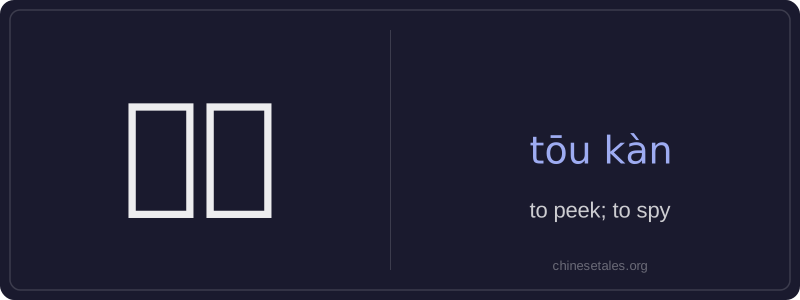
'偷看' (tōu kàn) is a compound verb meaning 'to peek' or 'to spy' — literally 'steal + look'. The character 偷 ('steal') adds the nuance of secrecy, furtiveness, or doing something without permission, while 看 means 'to look' or 'to watch'. Together, they describe the act of glancing at something or someone surreptitiously, often out of curiosity, shyness, or mild mischief. It implies the viewer intends to remain unnoticed and may carry a slightly negative or playful connotation depending on context.
This word is commonly used in everyday situations: checking a text message over someone’s shoulder, glancing at a test paper during an exam, or secretly observing someone you’re attracted to. It’s not as serious as 'spy' in espionage contexts (which would use 窥探 or 监视), nor is it inherently malicious — tone and context determine whether it sounds cheeky, awkward, or inappropriate. It frequently appears in spoken Mandarin and informal writing, especially when describing minor, human moments of curiosity or hesitation.
Example Sentences
Related Words
国语
‘Guó yǔ’ literally means 'national language'—
面条
‘面条’ (miàn tiáo) literally means ‘flour str
无论谁
‘无论谁’ (wú lùn shéi) is a pronoun meaning
不对
不对 (bù duì) literally combines 不 (bù), meani
外语
‘外语’ literally means ‘outside language’ —
认同
‘认同’ (tóng rèn) is a verb meaning ‘to ident
中学
'Zhōngxué' literally combines 'zhōng' (middle)
背后
背后 literally means 'back + behind' and functions