Word Explanation
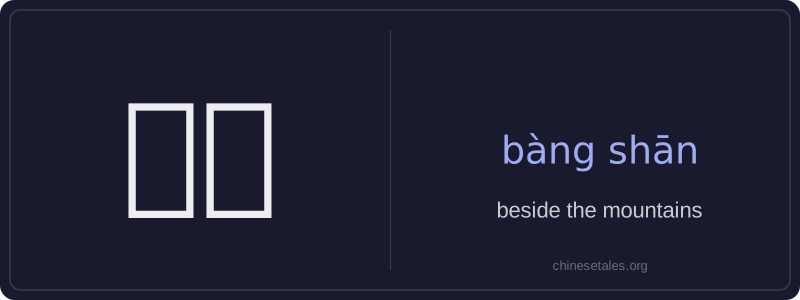
'Bàng shān' literally means 'beside the mountains'—'bàng' indicates proximity or adjacency (like 'next to' or 'alongside'), and 'shān' means 'mountain.' Together, they form a noun phrase describing a location situated at the foot of or adjacent to mountainous terrain. It is commonly used in geographical descriptions, travel writing, and landscape poetry to evoke serene, natural settings.
This term often appears in place names (e.g., villages or roads named 傍山) and descriptive prose about rural or scenic areas. Unlike verbs such as '靠山' (to rely on someone powerful), 傍山 is purely locative and static—it does not imply action or metaphorical dependence. It carries a calm, picturesque connotation and is favored in formal or literary contexts over casual speech, where simpler phrases like '在山边' might be preferred.
Example Sentences
Related Words
国语
‘Guó yǔ’ literally means 'national language'—
面条
‘面条’ (miàn tiáo) literally means ‘flour str
无论谁
‘无论谁’ (wú lùn shéi) is a pronoun meaning
不对
不对 (bù duì) literally combines 不 (bù), meani
外语
‘外语’ literally means ‘outside language’ —
认同
‘认同’ (tóng rèn) is a verb meaning ‘to ident
中学
'Zhōngxué' literally combines 'zhōng' (middle)
背后
背后 literally means 'back + behind' and functions