Word Explanation
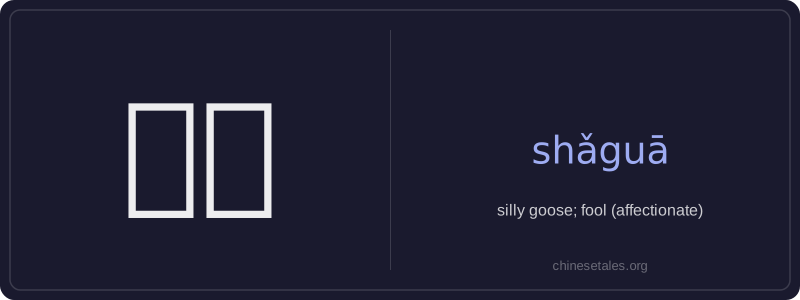
‘傻瓜’ (shǎguā) literally means ‘silly melon’ or ‘foolish gourd’, but it’s used idiomatically to mean ‘silly goose’ or ‘fool’ — usually in a light-hearted, teasing, or affectionate way. The character 傻 (shǎ) means ‘foolish’ or ‘silly’, while 瓜 (guā), though literally ‘melon’, functions here as a playful, harmless noun suffix that softens the insult — much like ‘goose’ or ‘dork’ in English. It’s rarely harsh or truly insulting; instead, it often conveys fond exasperation, especially among friends, family members, or romantic partners.
This term is common in informal spoken Chinese and appears frequently in TV dramas, casual texting, and everyday banter. Unlike stronger words for ‘fool’ (e.g., 白痴), 傻瓜 carries warmth and intimacy — you’d call your younger sibling or partner 傻瓜 playfully, not a stranger in anger. Its melon imagery ties it loosely to the ‘Animals’ topic tag via cultural association with whimsical, non-threatening animal-adjacent nicknames (like ‘goose’ in English), even though 瓜 is technically a plant — the usage pattern aligns more closely with affectionate animal-based terms of endearment.
Example Sentences
Related Words
国语
‘Guó yǔ’ literally means 'national language'—
面条
‘面条’ (miàn tiáo) literally means ‘flour str
无论谁
‘无论谁’ (wú lùn shéi) is a pronoun meaning
不对
不对 (bù duì) literally combines 不 (bù), meani
外语
‘外语’ literally means ‘outside language’ —
认同
‘认同’ (tóng rèn) is a verb meaning ‘to ident
中学
'Zhōngxué' literally combines 'zhōng' (middle)
背后
背后 literally means 'back + behind' and functions