Word Explanation
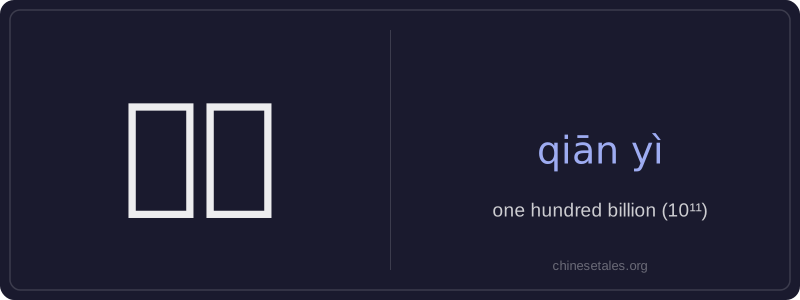
千亿 (qiān yì) is a Chinese numeral meaning 'one hundred billion' (10¹¹). It combines 千 (qiān, 'thousand') and 亿 (yì, 'hundred million'), where 亿 equals 10⁸ — so 千 × 亿 = 10³ × 10⁸ = 10¹¹. Unlike English, which uses 'billion' for 10⁹, Chinese counting follows the 'myriad system': 万 (wàn) = 10⁴, 亿 = 10⁸, 万亿 = 10¹², etc. Thus 千亿 is not 'a thousand times one billion' in the Western sense but a fixed unit in the Chinese numerical hierarchy.
This term appears frequently in contexts involving large-scale economics, national budgets, corporate valuations, population estimates, or scientific measurements — anywhere figures exceed tens of billions. It's formal and precise, used in news reports, financial statements, and policy documents. While native speakers understand it instantly, learners must remember that 亿 is the base unit for large numbers in Chinese, not 'million' or 'billion' as in English, making direct translation misleading without cultural-numerical awareness.
Example Sentences
Related Words
国语
‘Guó yǔ’ literally means 'national language'—
面条
‘面条’ (miàn tiáo) literally means ‘flour str
无论谁
‘无论谁’ (wú lùn shéi) is a pronoun meaning
不对
不对 (bù duì) literally combines 不 (bù), meani
外语
‘外语’ literally means ‘outside language’ —
认同
‘认同’ (tóng rèn) is a verb meaning ‘to ident
中学
'Zhōngxué' literally combines 'zhōng' (middle)
背后
背后 literally means 'back + behind' and functions