Word Explanation
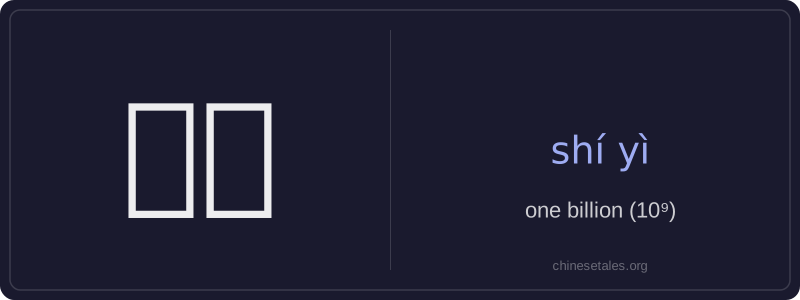
‘十亿’ (shí yì) literally means ‘ten hundred-million’ and equals one billion (10⁹ or 1,000,000,000) in the Chinese numeral system. Unlike English, which uses ‘billion’ for 10⁹, traditional Chinese counting is based on myriads: 万 (wàn) = 10⁴, 亿 (yì) = 10⁸, so 十亿 = 10 × 10⁸ = 10⁹. This term is used exclusively for large quantities — population figures, national budgets, corporate revenues, or scientific measurements — and always functions as a numeral, not a noun on its own.
In spoken and written Chinese, 十亿 is standard in mainland China and Singapore, while Taiwan and some overseas communities may occasionally use ‘十億’ (traditional characters) but retain the same pronunciation and meaning. It appears in formal contexts like news reports, economic data, and official statistics, and is never used colloquially to exaggerate small amounts — doing so would sound unnatural or humorous.
Example Sentences
Related Words
国语
‘Guó yǔ’ literally means 'national language'—
面条
‘面条’ (miàn tiáo) literally means ‘flour str
无论谁
‘无论谁’ (wú lùn shéi) is a pronoun meaning
不对
不对 (bù duì) literally combines 不 (bù), meani
外语
‘外语’ literally means ‘outside language’ —
认同
‘认同’ (tóng rèn) is a verb meaning ‘to ident
中学
'Zhōngxué' literally combines 'zhōng' (middle)
背后
背后 literally means 'back + behind' and functions