Word Explanation
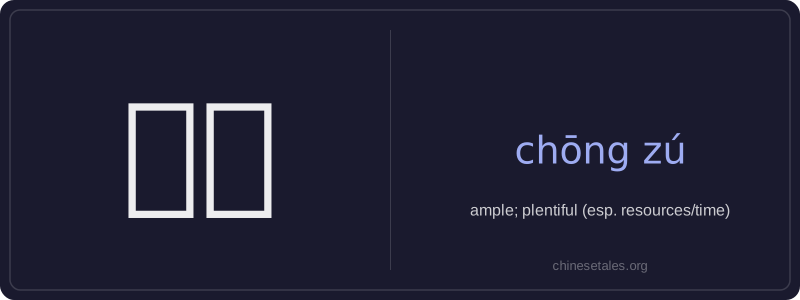
充足 means 'ample' or 'plentiful', especially when referring to resources that are sufficient in quantity or degree — most commonly time, energy, funds, or supplies. The character 充 (chōng) conveys 'to fill' or 'to be full', while 足 (zú) means 'enough' or 'sufficient'; together, they form a compound adjective emphasizing completeness and adequacy. It carries a formal, positive tone and is frequently used in written Chinese and formal speech.
This word often appears in contexts like planning, health, education, or logistics — for example, when describing adequate rest, sufficient raw materials, or enough preparation time before an event. It’s rarely used for abstract concepts like emotions or opinions; instead, it focuses on tangible or measurable quantities. Unlike colloquial alternatives like 够 (gòu), 充足 sounds more objective and authoritative, making it common in reports, official announcements, and academic writing.
Example Sentences
Related Words
国语
‘Guó yǔ’ literally means 'national language'—
面条
‘面条’ (miàn tiáo) literally means ‘flour str
无论谁
‘无论谁’ (wú lùn shéi) is a pronoun meaning
不对
不对 (bù duì) literally combines 不 (bù), meani
外语
‘外语’ literally means ‘outside language’ —
认同
‘认同’ (tóng rèn) is a verb meaning ‘to ident
中学
'Zhōngxué' literally combines 'zhōng' (middle)
背后
背后 literally means 'back + behind' and functions