Word Explanation
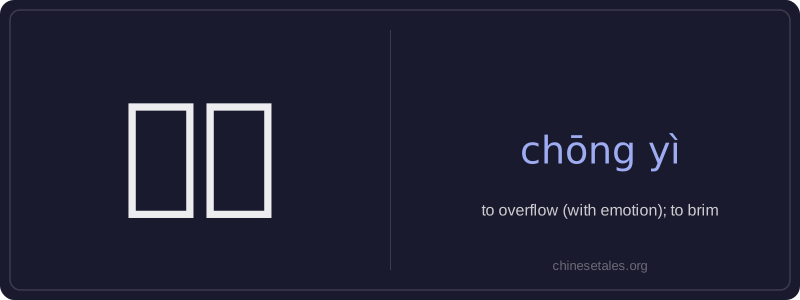
‘充溢’ is a literary and expressive verb meaning ‘to overflow’ or ‘to brim’, especially with intangible qualities like emotion, joy, sorrow, or energy. It combines 充 (chōng), meaning ‘to fill’ or ‘to be full’, and 溢 (yì), meaning ‘to spill over’ or ‘to overflow’. Together, they convey the idea of something so abundant that it cannot be contained—like feelings welling up beyond restraint. It’s often used in formal writing, poetry, speeches, or heartfelt descriptions, and almost always appears with abstract nouns (e.g., 欢乐, 悲伤, 热情, 温暖) rather than physical substances.
The word carries a positive or intense emotional connotation—though it can describe overwhelming sadness, it most frequently evokes warmth, vitality, or profound connection. It’s rarely used in casual conversation; learners should reserve it for descriptive, elevated contexts. Grammatically, it functions as a predicate verb and commonly follows subject + 充溢 + (with) + noun phrase (e.g., 眼中充溢着泪水). Unlike simple verbs like 满 or 溢, 充溢 emphasizes both fullness and spontaneous overflow, making it vivid and emotive.
Example Sentences
Related Words
国语
‘Guó yǔ’ literally means 'national language'—
面条
‘面条’ (miàn tiáo) literally means ‘flour str
无论谁
‘无论谁’ (wú lùn shéi) is a pronoun meaning
不对
不对 (bù duì) literally combines 不 (bù), meani
外语
‘外语’ literally means ‘outside language’ —
认同
‘认同’ (tóng rèn) is a verb meaning ‘to ident
中学
'Zhōngxué' literally combines 'zhōng' (middle)
背后
背后 literally means 'back + behind' and functions