Word Explanation
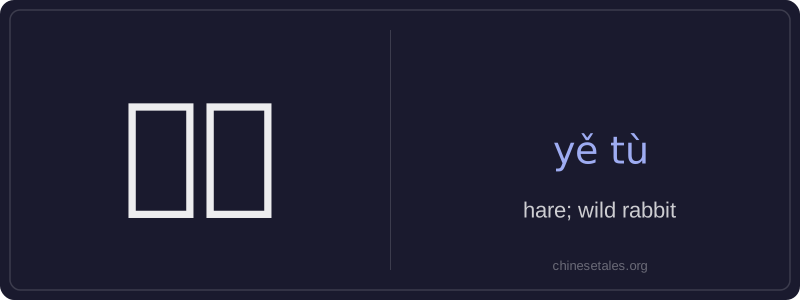
‘野兔’ literally means ‘wild rabbit’ — combining 野 (yě), meaning ‘wild’, ‘uncultivated’, or ‘outside human control’, and 兔 (tù), meaning ‘rabbit’. Unlike domesticated rabbits (家兔, jiātù), which are raised for food or as pets, 野兔 refers specifically to wild hares and rabbits that live freely in forests, grasslands, or mountains. It emphasizes the animal’s natural, untamed state and ecological role.
In Chinese, 野兔 is used in both scientific and everyday contexts — from wildlife documentaries and biology textbooks to folktales and rural storytelling. While often translated as ‘hare’, it can refer broadly to several species of wild lagomorphs native to China, including the Chinese hare (Lepus sinensis). The term carries a neutral-to-positive connotation, evoking images of speed, alertness, and wilderness — unlike 野狗 (yěgǒu, ‘stray dog’), which often has negative associations.
Example Sentences
Related Words
国语
‘Guó yǔ’ literally means 'national language'—
面条
‘面条’ (miàn tiáo) literally means ‘flour str
无论谁
‘无论谁’ (wú lùn shéi) is a pronoun meaning
不对
不对 (bù duì) literally combines 不 (bù), meani
外语
‘外语’ literally means ‘outside language’ —
认同
‘认同’ (tóng rèn) is a verb meaning ‘to ident
中学
'Zhōngxué' literally combines 'zhōng' (middle)
背后
背后 literally means 'back + behind' and functions