Word Explanation
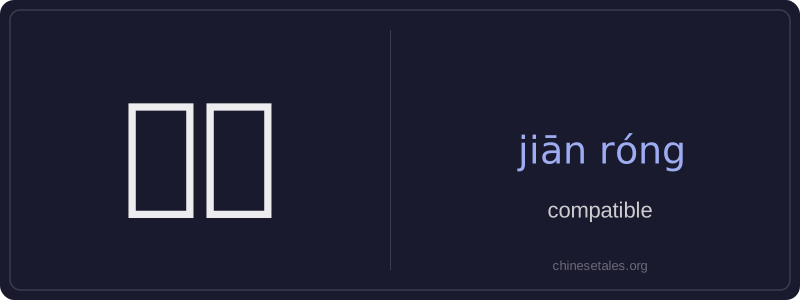
兼容 (jiān róng) literally means 'to simultaneously contain or accommodate' — 兼 (jiān) conveys 'both at once' or 'in addition', while 容 (róng) means 'to tolerate', 'to accept', or 'to hold'. Together, they describe the ability of two or more systems, devices, software, or standards to work together without conflict. It’s most commonly used in technical contexts: hardware compatibility (e.g., a printer compatible with multiple operating systems), software interoperability (e.g., an app that runs on both iOS and Android), or data format support.
Unlike English 'compatible', which can occasionally describe interpersonal harmony, 兼容 is almost exclusively technical or functional in modern usage — you wouldn’t say 他和同事很兼容 to mean 'he gets along well with his colleagues'. It implies mutual adaptability and coexistence without modification or loss of function. The word carries a neutral-to-positive connotation and frequently appears in product specifications, technical documentation, and IT discussions.
Example Sentences
Related Words
国语
‘Guó yǔ’ literally means 'national language'—
面条
‘面条’ (miàn tiáo) literally means ‘flour str
无论谁
‘无论谁’ (wú lùn shéi) is a pronoun meaning
不对
不对 (bù duì) literally combines 不 (bù), meani
外语
‘外语’ literally means ‘outside language’ —
认同
‘认同’ (tóng rèn) is a verb meaning ‘to ident
中学
'Zhōngxué' literally combines 'zhōng' (middle)
背后
背后 literally means 'back + behind' and functions