Word Explanation
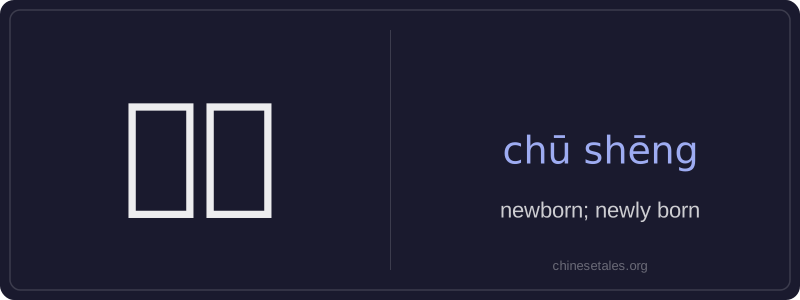
初生 literally combines 初 (chū), meaning 'first' or 'beginning', and 生 (shēng), meaning 'to be born' or 'life'. Together, they form a compound noun meaning 'newborn' or 'newly born'—emphasizing the very first stage of life. It is commonly used to describe infants, hatchlings, or newborn animals, often in formal, literary, or descriptive contexts rather than casual speech.
The term carries a gentle, slightly poetic tone and appears frequently in biology, veterinary texts, parenting resources, and nature documentaries. While it can technically refer to humans, it’s more typical for animals (e.g., a litter of puppies) or metaphorical uses (e.g., 'the初生 stage of a project'), though such metaphors are rare and marked. It is not used for inanimate objects or abstract concepts without clear biological birth imagery.
Example Sentences
Related Words
国语
‘Guó yǔ’ literally means 'national language'—
面条
‘面条’ (miàn tiáo) literally means ‘flour str
无论谁
‘无论谁’ (wú lùn shéi) is a pronoun meaning
不对
不对 (bù duì) literally combines 不 (bù), meani
外语
‘外语’ literally means ‘outside language’ —
认同
‘认同’ (tóng rèn) is a verb meaning ‘to ident
中学
'Zhōngxué' literally combines 'zhōng' (middle)
背后
背后 literally means 'back + behind' and functions