Word Explanation
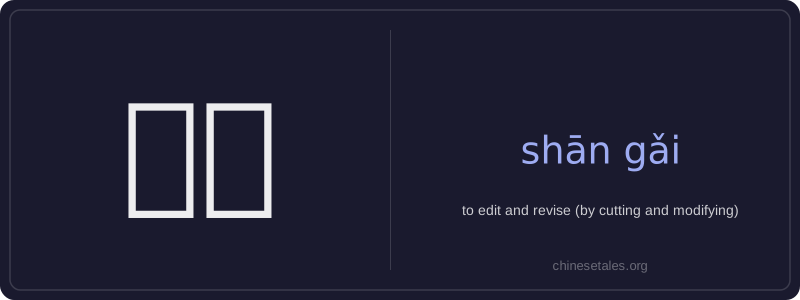
‘删改’ is a compound verb meaning ‘to edit and revise’, specifically by removing (删) unwanted parts and modifying (改) existing content. The first character 删 means ‘to delete’ or ‘to cut out’, often implying removal of text, images, or data; the second character 改 means ‘to change’, ‘to alter’, or ‘to correct’. Together, they describe an integrated editing process that involves both deletion and revision—not just one or the other. This term is commonly used in writing, publishing, software development, and academic work.
It emphasizes intentional, thoughtful revision rather than casual tweaking. Unlike simpler verbs like 修改 (to revise) or 删除 (to delete), 删改 highlights the dual action and is often used when substantial restructuring is involved—such as refining a draft manuscript, polishing a report, or cleaning up code comments. It carries a neutral-to-formal register and appears frequently in professional, educational, and digital contexts.
Example Sentences
Related Words
国语
‘Guó yǔ’ literally means 'national language'—
无论谁
‘无论谁’ (wú lùn shéi) is a pronoun meaning
面条
‘面条’ (miàn tiáo) literally means ‘flour str
外语
‘外语’ literally means ‘outside language’ —
不对
不对 (bù duì) literally combines 不 (bù), meani
认同
‘认同’ (tóng rèn) is a verb meaning ‘to ident
中学
'Zhōngxué' literally combines 'zhōng' (middle)
背后
背后 literally means 'back + behind' and functions