Word Explanation
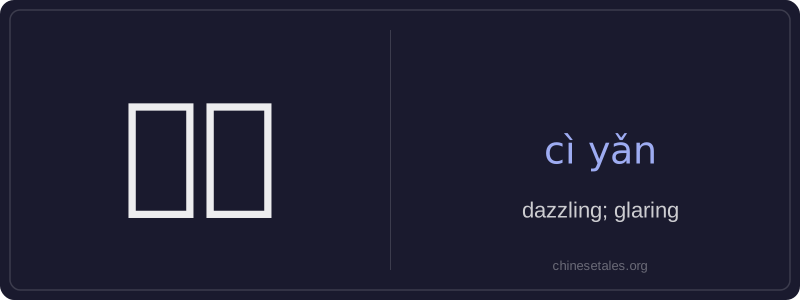
‘刺眼’ literally means ‘stabbing the eye’ — combining 刺 (cì, ‘to pierce’ or ‘to sting’) and 眼 (yǎn, ‘eye’). It describes light so intense or harsh that it causes physical discomfort, like sunlight reflecting off snow or a car’s headlights at night. Unlike general terms for brightness (e.g., 明亮), 刺眼 carries a distinctly negative, sensory-connotative meaning: it implies irritation, temporary visual strain, or involuntary squinting.
This adjective is commonly used in everyday situations involving lighting conditions — think of unshaded lamps, glossy phone screens in dark rooms, or midday sun on water. It functions predicatively (e.g., 这灯太刺眼了) or attributively before nouns (e.g., 刺眼的阳光), but rarely as a standalone noun. Native speakers often pair it with degree words like 太, 很, or 有点 to indicate intensity, and it frequently appears in warnings or complaints about environmental comfort.
Example Sentences
Related Words
国语
‘Guó yǔ’ literally means 'national language'—
无论谁
‘无论谁’ (wú lùn shéi) is a pronoun meaning
面条
‘面条’ (miàn tiáo) literally means ‘flour str
外语
‘外语’ literally means ‘outside language’ —
不对
不对 (bù duì) literally combines 不 (bù), meani
认同
‘认同’ (tóng rèn) is a verb meaning ‘to ident
中学
'Zhōngxué' literally combines 'zhōng' (middle)
背后
背后 literally means 'back + behind' and functions