Word Explanation
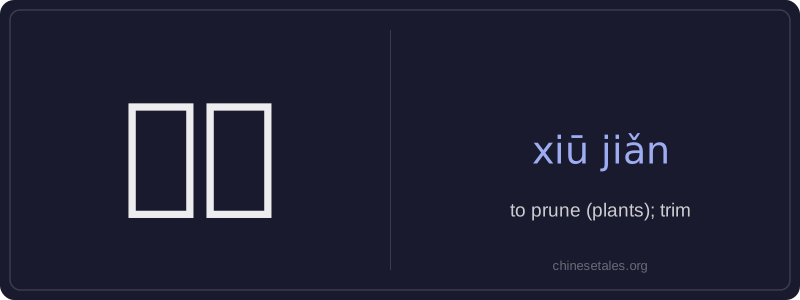
修剪 is a compound verb meaning 'to prune' or 'to trim', most commonly used for plants—such as cutting back overgrown branches, shaping hedges, or removing dead leaves to encourage healthy growth. The first character 修 (xiū) conveys the idea of 'repairing', 'refining', or 'improving', while 剪 (jiǎn) means 'to cut' or 'to clip'. Together, they emphasize purposeful, careful cutting—not just removal, but enhancement of form, health, or aesthetics.
This word is frequently used in gardening, agriculture, and landscaping contexts, and occasionally extends metaphorically to editing (e.g., trimming text), though that usage is less common and often requires clarification. It implies intentionality and skill: unlike casual cutting, 修剪 suggests thoughtful, measured intervention. You’ll hear it in instructions from gardeners, in plant-care guides, or when discussing bonsai or fruit-tree maintenance. It’s neutral in register—appropriate in both spoken and written Chinese—and rarely used for people or animals (unlike 'trimming hair', which uses 修剪头发 only in very formal or technical descriptions).
Example Sentences
Related Words
国语
‘Guó yǔ’ literally means 'national language'—
无论谁
‘无论谁’ (wú lùn shéi) is a pronoun meaning
面条
‘面条’ (miàn tiáo) literally means ‘flour str
外语
‘外语’ literally means ‘outside language’ —
不对
不对 (bù duì) literally combines 不 (bù), meani
认同
‘认同’ (tóng rèn) is a verb meaning ‘to ident
中学
'Zhōngxué' literally combines 'zhōng' (middle)
背后
背后 literally means 'back + behind' and functions