Word Explanation
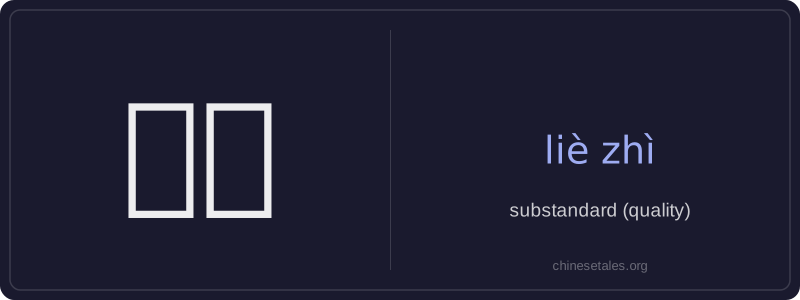
劣质 (liè zhì) is an adjective meaning 'substandard' or 'inferior in quality.' It combines two characters: 劣 (liè), meaning 'poor,' 'inferior,' or 'low-grade,' and 质 (zhì), meaning 'quality' or 'substance.' Together, they literally mean 'poor quality' and are used almost exclusively to describe products, materials, or services that fail to meet basic standards of safety, durability, or performance.
This term carries a strong negative connotation and is commonly found in consumer protection contexts, news reports about counterfeit goods, food safety warnings, or product reviews. It’s rarely used for people or abstract concepts — it’s firmly tied to tangible items and their physical or functional shortcomings. You’ll often see it paired with nouns like 产品 (chǎnpǐn, 'product'), 食品 (shípǐn, 'food'), or 材料 (cáiliào, 'material'). Unlike neutral terms like 普通 (pǔtōng, 'ordinary'), 劣质 implies serious deficiency — often posing health or safety risks.
Example Sentences
Related Words
国语
‘Guó yǔ’ literally means 'national language'—
无论谁
‘无论谁’ (wú lùn shéi) is a pronoun meaning
面条
‘面条’ (miàn tiáo) literally means ‘flour str
外语
‘外语’ literally means ‘outside language’ —
不对
不对 (bù duì) literally combines 不 (bù), meani
认同
‘认同’ (tóng rèn) is a verb meaning ‘to ident
中学
'Zhōngxué' literally combines 'zhōng' (middle)
背后
背后 literally means 'back + behind' and functions