Word Explanation
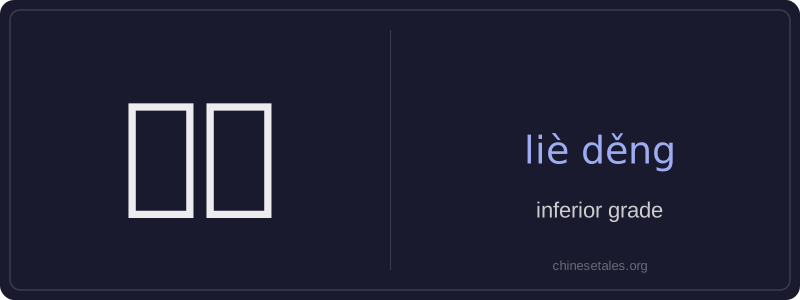
劣等 (liè děng) is an adjective meaning 'inferior grade' or 'substandard', describing something of noticeably poor quality, low rank, or deficient value compared to accepted standards. The first character 劣 (liè) means 'inferior' or 'poor', often implying moral or functional deficiency; the second character 等 (děng) means 'grade', 'class', or 'level'. Together, they form a compound that emphasizes categorical low standing — not merely 'bad', but officially or objectively ranked below standard. It’s commonly used in formal, evaluative, or regulatory contexts, such as livestock classification, product certification, or academic assessments.
This term carries a strong negative connotation and is rarely used in casual speech. It frequently appears in official documents, agricultural reports, or quality control settings — for instance, labeling animals unfit for breeding or meat production due to genetic defects or health issues. While it can technically describe objects or services, its most characteristic and frequent usage relates to biological or material classifications where hierarchy and standards matter.
Example Sentences
Related Words
国语
‘Guó yǔ’ literally means 'national language'—
无论谁
‘无论谁’ (wú lùn shéi) is a pronoun meaning
面条
‘面条’ (miàn tiáo) literally means ‘flour str
外语
‘外语’ literally means ‘outside language’ —
不对
不对 (bù duì) literally combines 不 (bù), meani
认同
‘认同’ (tóng rèn) is a verb meaning ‘to ident
中学
'Zhōngxué' literally combines 'zhōng' (middle)
背后
背后 literally means 'back + behind' and functions