Word Explanation
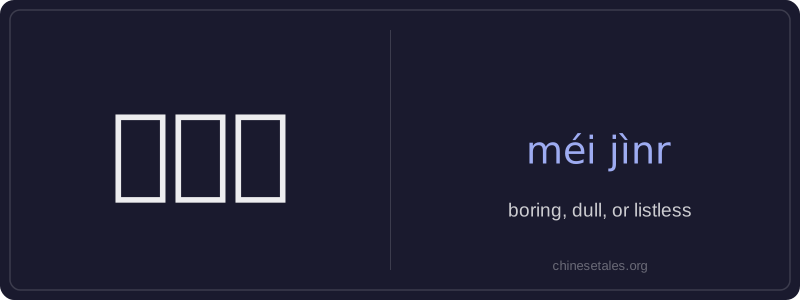
没劲儿 (méi jìnr) is a colloquial adjective meaning 'boring', 'dull', 'uninteresting', or 'lacking energy/enthusiasm'. Literally, 没 means 'not have', 劲 means 'energy', 'vigor', or 'appeal', and 儿 is a diminutive, rhotacized suffix common in Northern Mandarin that softens the tone and adds informality. Together, the phrase conveys a sense of flatness — as if something lacks spark, excitement, or motivating force. It’s frequently used to describe activities, events, people, or even moods — for example, a movie that feels slow and unengaging, or a friend who seems unusually lethargic.
This expression is highly conversational and typical in informal spoken Mandarin, especially in Beijing and northern regions. While it can describe objective dullness (e.g., a boring lecture), it often reflects subjective disappointment or low personal engagement. It’s rarely used in formal writing or professional contexts, and never with honorifics — using it to describe someone else’s work directly may sound blunt or dismissive without softening phrases like ‘我觉得’ (I feel…).
Example Sentences
Related Words
国语
‘Guó yǔ’ literally means 'national language'—
无论谁
‘无论谁’ (wú lùn shéi) is a pronoun meaning
面条
‘面条’ (miàn tiáo) literally means ‘flour str
外语
‘外语’ literally means ‘outside language’ —
不对
不对 (bù duì) literally combines 不 (bù), meani
认为
‘认为’ (rèn wéi) is a transitive verb meaning
认同
‘认同’ (tóng rèn) is a verb meaning ‘to ident
中学
'Zhōngxué' literally combines 'zhōng' (middle)