Word Explanation
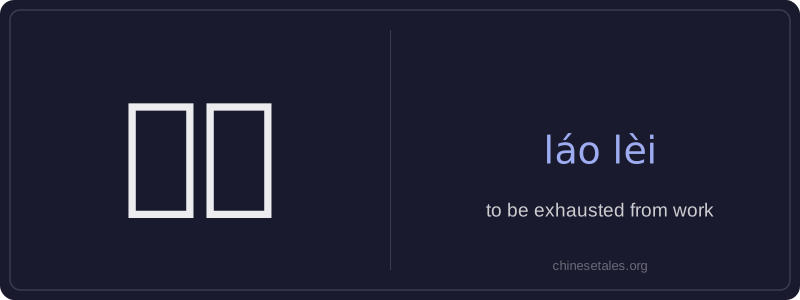
‘劳累’ is an adjective meaning 'exhausted from physical or mental work.' It combines two characters: 劳 (láo), meaning 'to toil' or 'labor,' and 累 (lèi), meaning 'tired' or 'fatigued.' Together, they emphasize exhaustion resulting specifically from sustained effort—not general tiredness (e.g., from lack of sleep) but weariness caused by demanding tasks, long hours, or heavy responsibilities. It’s commonly used to describe how someone feels after hard work, caregiving, studying, or overtime.
The word carries a tone of sympathy or concern and often appears in health-related contexts, advice, or empathetic statements. While it can function as a predicate adjective ('他很劳累'), it frequently appears in compound structures like 劳累过度 (overworked) or 身体劳累 (physically exhausted). It is not used for temporary or mild fatigue—words like 累 (lèi) alone or 困 (tired/sleepy) are more appropriate for those cases.
Example Sentences
Related Words
国语
‘Guó yǔ’ literally means 'national language'—
无论谁
‘无论谁’ (wú lùn shéi) is a pronoun meaning
面条
‘面条’ (miàn tiáo) literally means ‘flour str
外语
‘外语’ literally means ‘outside language’ —
不对
不对 (bù duì) literally combines 不 (bù), meani
认为
‘认为’ (rèn wéi) is a transitive verb meaning
认同
‘认同’ (tóng rèn) is a verb meaning ‘to ident
中学
'Zhōngxué' literally combines 'zhōng' (middle)