Word Explanation
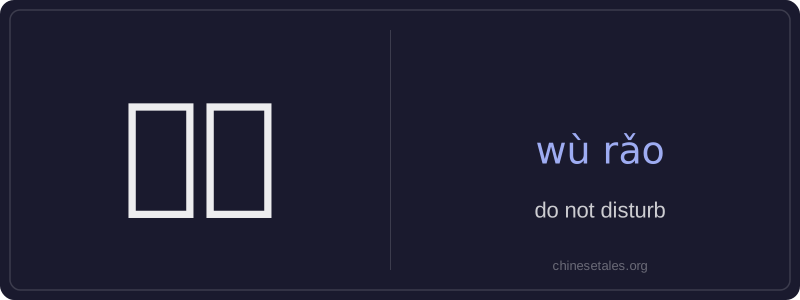
‘勿扰’ is a concise, formal phrase meaning ‘do not disturb’. It combines two characters: 勿 (wù), a classical negative particle meaning ‘do not’ or ‘must not’, and 扰 (rǎo), meaning ‘to disturb’, ‘to bother’, or ‘to interrupt’. Though each character carries weight on its own, together they form an imperative expression used to request privacy or signal that interruption is unwelcome. The phrase is commonly seen on signs, hotel room doors, office doors, or digital status indicators.
It functions as both a noun (e.g., ‘a do-not-disturb sign’) and a verb phrase (e.g., ‘please set your phone to 勿扰 mode’). Its tone is polite but firm, rooted in classical Chinese usage—hence its frequent appearance in formal or semi-official contexts rather than casual speech. While modern spoken Mandarin often uses alternatives like ‘别打扰我’ (don’t disturb me), 勿扰 retains a sense of authority and brevity that makes it ideal for written notices and interface labels.
Example Sentences
Related Words
国语
‘Guó yǔ’ literally means 'national language'—
无论谁
‘无论谁’ (wú lùn shéi) is a pronoun meaning
面条
‘面条’ (miàn tiáo) literally means ‘flour str
外语
‘外语’ literally means ‘outside language’ —
不对
不对 (bù duì) literally combines 不 (bù), meani
认为
‘认为’ (rèn wéi) is a transitive verb meaning
认同
‘认同’ (tóng rèn) is a verb meaning ‘to ident
中学
'Zhōngxué' literally combines 'zhōng' (middle)