Word Explanation
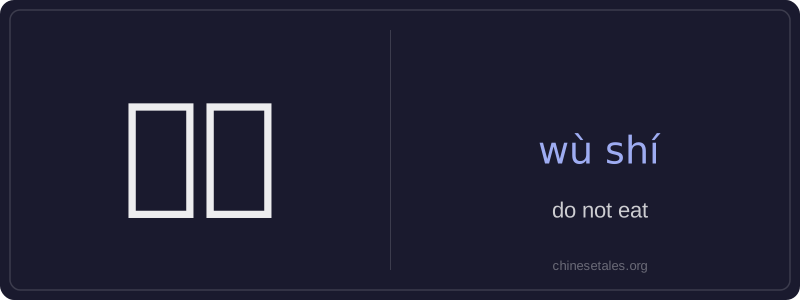
'勿食' is a formal, written imperative phrase meaning 'do not eat'. It combines the classical negative adverb 勿 (wù), which means 'do not' or 'must not', and the verb 食 (shí), meaning 'to eat'. Unlike the more common spoken prohibition '不要吃' (bú yào chī), '勿食' appears primarily on warning labels, safety instructions, or official notices—especially where food safety or toxicity is involved. Its tone is authoritative and urgent, often implying serious risk.
This phrase is typically used in contexts like medicine packaging, chemical containers, or wild mushroom guides, where consumption could cause harm. It’s rarely used in casual speech or daily conversation; native speakers would say '别吃' or '不能吃' instead. The characters are monosyllabic and carry classical literary weight, making '勿食' concise but highly serious—similar in function to English warnings like 'DO NOT CONSUME' or 'POISON: DO NOT EAT'.
Example Sentences
Related Words
国语
‘Guó yǔ’ literally means 'national language'—
无论谁
‘无论谁’ (wú lùn shéi) is a pronoun meaning
面条
‘面条’ (miàn tiáo) literally means ‘flour str
外语
‘外语’ literally means ‘outside language’ —
不对
不对 (bù duì) literally combines 不 (bù), meani
认为
‘认为’ (rèn wéi) is a transitive verb meaning
认同
‘认同’ (tóng rèn) is a verb meaning ‘to ident
中学
'Zhōngxué' literally combines 'zhōng' (middle)