Word Explanation
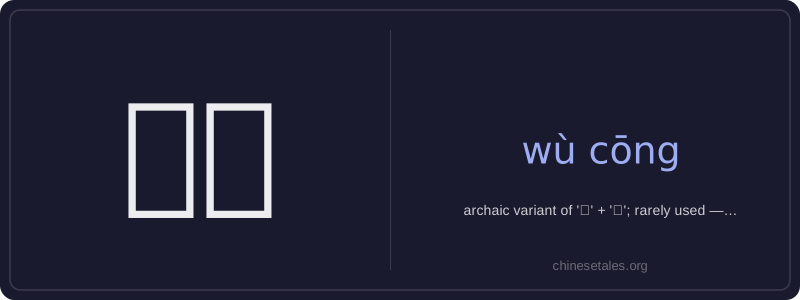
'勿匆' is an archaic, literary variant of the more common adverb '勿忙' (wù máng) or modern '匆忙' (cōng máng), meaning 'hastily' or 'in a rush'. It combines 勿 (wù), an archaic negative particle often seen in classical texts meaning 'do not', and 冲 (cōng), which here functions as a phonetic-semantic compound element related to haste—though note that the standard character for 'haste' is 冲, not 冲; '勿匆' itself is a rare orthographic variant with no independent semantic logic. It appears almost exclusively in pre-modern poetry or highly stylized prose and carries a deliberately antique tone.
This form is not used in contemporary spoken or written Mandarin. Learners should treat it as a historical curiosity rather than an active vocabulary item. Confusing it with '匆忙' or misreading it as '勿忙' (which is also nonstandard) is common among beginners encountering classical texts. Its rarity means it lacks dictionary entries in most modern references and does not follow standard grammatical patterns for adverbs.
Example Sentences
Related Words
国语
‘Guó yǔ’ literally means 'national language'—
无论谁
‘无论谁’ (wú lùn shéi) is a pronoun meaning
外语
‘外语’ literally means ‘outside language’ —
面条
‘面条’ (miàn tiáo) literally means ‘flour str
不对
不对 (bù duì) literally combines 不 (bù), meani
认为
‘认为’ (rèn wéi) is a transitive verb meaning
认同
‘认同’ (tóng rèn) is a verb meaning ‘to ident
中学
'Zhōngxué' literally combines 'zhōng' (middle)