Word Explanation
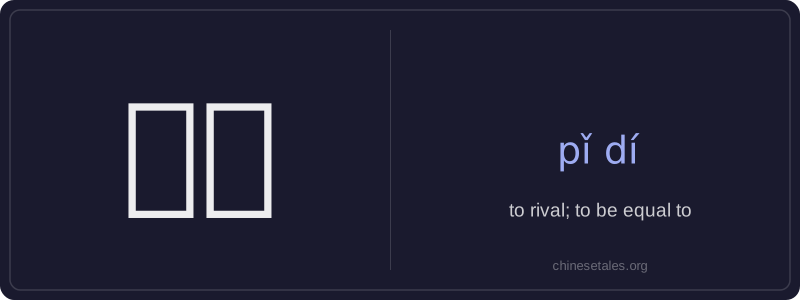
匹敌 (pǐ dí) is a formal literary verb meaning 'to rival' or 'to be equal to'—especially in terms of ability, strength, status, or quality. Though the character 匹 originally meant 'a unit for horses' and enemy-related connotations come from 敌 ('enemy'), together they form an idiomatic compound suggesting parity in competition or comparison—not literal combat. It emphasizes equivalence in stature or capability, often used with subjects like people, organizations, technologies, or achievements.
This word appears frequently in written Chinese—news reports, academic writing, and formal speeches—but is rare in casual spoken language. It typically follows a subject and precedes a noun or clause introduced by 与 ('with') or 于 ('in comparison to'). Because it's inherently comparative, it rarely stands alone without context indicating what is being matched or surpassed.
Example Sentences
Related Words
国语
‘Guó yǔ’ literally means 'national language'—
无论谁
‘无论谁’ (wú lùn shéi) is a pronoun meaning
外语
‘外语’ literally means ‘outside language’ —
面条
‘面条’ (miàn tiáo) literally means ‘flour str
不对
不对 (bù duì) literally combines 不 (bù), meani
认为
‘认为’ (rèn wéi) is a transitive verb meaning
认同
‘认同’ (tóng rèn) is a verb meaning ‘to ident
中学
'Zhōngxué' literally combines 'zhōng' (middle)