Word Explanation
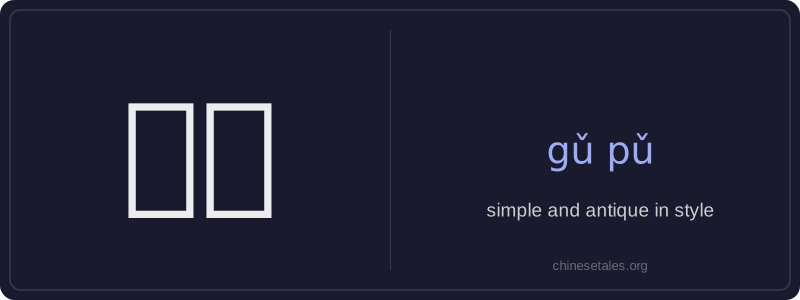
古朴 (gǔ pǔ) is an adjective describing something that has a simple, unadorned appearance with a strong sense of antiquity and authenticity. The first character 古 means 'ancient' or 'old', evoking historical depth and timelessness; the second character 朴 means 'simple', 'plain', or 'unrefined', suggesting naturalness and absence of artificial embellishment. Together, they convey a harmonious blend of age-old charm and rustic simplicity—not merely old, but gracefully aged and genuinely modest.
This term is most commonly used to describe architecture, furniture, village scenery, handicrafts, or artistic styles that retain traditional forms and materials without modern interference. It carries positive connotations of elegance, cultural continuity, and quiet dignity. You’ll often see it in travel writing, cultural commentary, or design descriptions—never for people or abstract concepts like emotions or technology. It’s stylistically formal yet warm, frequently appearing in literary or descriptive contexts rather than casual speech.
Example Sentences
Related Words
国语
‘Guó yǔ’ literally means 'national language'—
无论谁
‘无论谁’ (wú lùn shéi) is a pronoun meaning
外语
‘外语’ literally means ‘outside language’ —
面条
‘面条’ (miàn tiáo) literally means ‘flour str
不对
不对 (bù duì) literally combines 不 (bù), meani
认为
‘认为’ (rèn wéi) is a transitive verb meaning
认同
‘认同’ (tóng rèn) is a verb meaning ‘to ident
中学
'Zhōngxué' literally combines 'zhōng' (middle)