Word Explanation
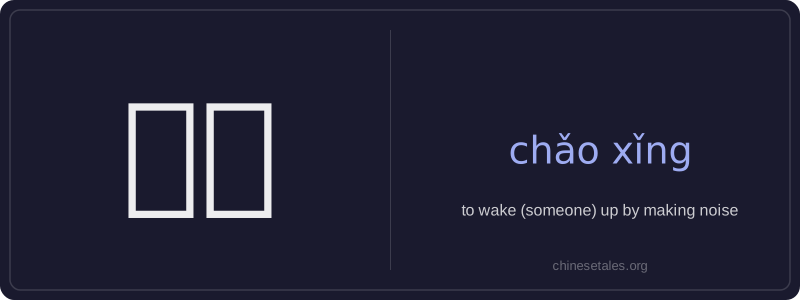
‘吵醒’ is a compound verb meaning ‘to wake (someone) up by making noise’. It combines 吵 (chǎo), meaning ‘to make a loud or disturbing noise’, and 醒 (xǐng), meaning ‘to wake up’ or ‘to become awake’. The structure follows the common Chinese pattern of [cause] + [result]: the noise (吵) causes the person to wake (醒). It is always used transitively — someone or something *causes* another person to wake up, so it requires an object (e.g., ‘他把我吵醒了’ — ‘He woke me up with noise’).
This verb is commonly used in everyday situations involving unintended disturbance: loud music, shouting, construction noise, or even pets barking early in the morning. It carries a slightly negative or apologetic connotation, implying the waking was unwanted or disruptive. Unlike the neutral ‘叫醒’ (to wake up, often intentionally), ‘吵醒’ emphasizes the unpleasant, noisy nature of the interruption.
Example Sentences
Related Words
国语
‘Guó yǔ’ literally means 'national language'—
无论谁
‘无论谁’ (wú lùn shéi) is a pronoun meaning
外语
‘外语’ literally means ‘outside language’ —
面条
‘面条’ (miàn tiáo) literally means ‘flour str
不对
不对 (bù duì) literally combines 不 (bù), meani
认为
‘认为’ (rèn wéi) is a transitive verb meaning
认同
‘认同’ (tóng rèn) is a verb meaning ‘to ident
中学
'Zhōngxué' literally combines 'zhōng' (middle)