Word Explanation
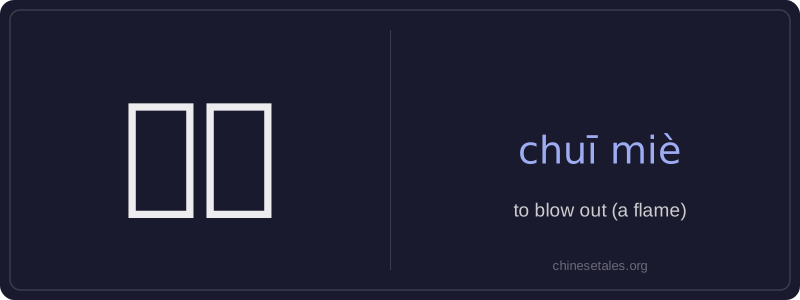
'Chuī miè' is a compound verb meaning 'to blow out'—specifically, to extinguish a flame by blowing air onto it. The first character 吹 (chuī) means 'to blow', and the second 灭 (miè) means 'to extinguish' or 'to go out'. Together, they form a tightly bound, action-oriented verb that emphasizes the physical act of using breath to put out fire or flame. It’s commonly used with candles, incense sticks, oil lamps, or birthday candles.
This verb is transitive and typically takes a direct object (e.g., a candle or flame), though the object may be omitted if context is clear. It carries no strong emotional or stylistic register—it’s neutral and practical, used in everyday speech, instructions, and storytelling. Unlike more formal or literary terms like 撤除 (to withdraw) or 熄灭 (to go out spontaneously), 吹灭 specifically implies intentional human action using breath, making it distinct and concrete.
Example Sentences
Related Words
国语
‘Guó yǔ’ literally means 'national language'—
无论谁
‘无论谁’ (wú lùn shéi) is a pronoun meaning
外语
‘外语’ literally means ‘outside language’ —
面条
‘面条’ (miàn tiáo) literally means ‘flour str
不对
不对 (bù duì) literally combines 不 (bù), meani
认为
‘认为’ (rèn wéi) is a transitive verb meaning
认同
‘认同’ (tóng rèn) is a verb meaning ‘to ident
中学
'Zhōngxué' literally combines 'zhōng' (middle)