Word Explanation
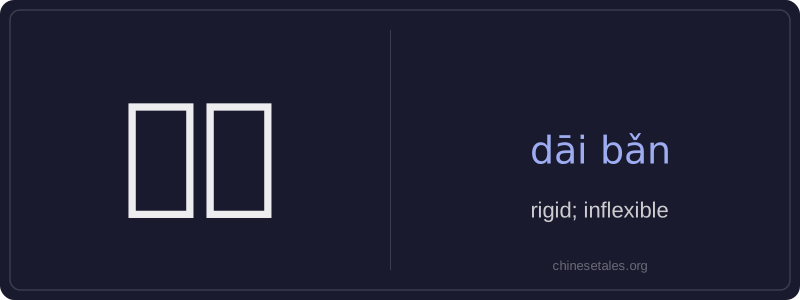
呆板 (dāi bǎn) is an adjective describing someone or something that lacks flexibility, spontaneity, or creativity — rigid in behavior, thinking, or expression. The character 呆 means 'dull' or 'stupid', suggesting a lack of mental liveliness; 板 literally means 'board' or 'plank', evoking stiffness and inflexibility. Together, they form a vivid metaphor: like a wooden board, the person or thing is unyielding and lifeless.
This word is commonly used to criticize overly formal, mechanical, or unimaginative approaches — for example, in teaching methods, artistic performances, or interpersonal communication. It often carries a mildly negative connotation, implying dullness rather than mere seriousness. While it can describe people (e.g., a teacher), it’s equally common for describing systems, designs, or routines that feel monotonous and uninspired.
Example Sentences
Related Words
国语
‘Guó yǔ’ literally means 'national language'—
无论谁
‘无论谁’ (wú lùn shéi) is a pronoun meaning
外语
‘外语’ literally means ‘outside language’ —
面条
‘面条’ (miàn tiáo) literally means ‘flour str
不对
不对 (bù duì) literally combines 不 (bù), meani
认为
‘认为’ (rèn wéi) is a transitive verb meaning
认同
‘认同’ (tóng rèn) is a verb meaning ‘to ident
中学
'Zhōngxué' literally combines 'zhōng' (middle)