Word Explanation
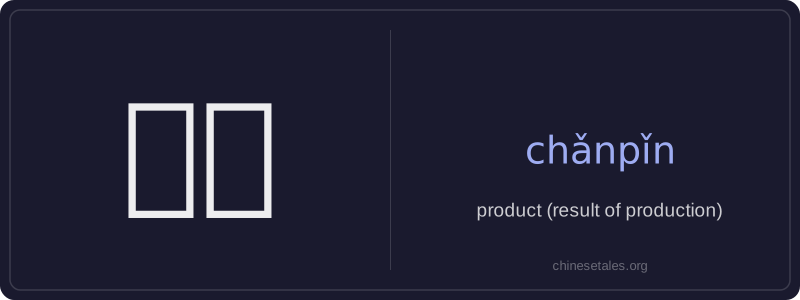
'产品' (chǎnpǐn) literally combines '产' (chǎn), meaning 'to produce' or 'production', and '品' (pǐn), meaning 'item', 'article', or 'goods'. Together, they refer to any tangible or intangible item that results from a manufacturing, agricultural, or creative process — such as a smartphone, a book, or even software. It is a formal, neutral term widely used in business, marketing, and everyday contexts when discussing goods offered for sale or use.
Unlike more colloquial terms like '东西' (dōngxi, 'thing'), '产品' emphasizes origin and purpose: it is something deliberately made for distribution or consumption. It appears frequently in company reports, advertisements, quality control discussions, and product launches. While it can refer to physical items (e.g., electronics), it also extends to services and digital offerings — as long as they are the output of an organized production effort.
Example Sentences
Related Words
国语
‘Guó yǔ’ literally means 'national language'—
无论谁
‘无论谁’ (wú lùn shéi) is a pronoun meaning
外语
‘外语’ literally means ‘outside language’ —
面条
‘面条’ (miàn tiáo) literally means ‘flour str
不对
不对 (bù duì) literally combines 不 (bù), meani
认为
‘认为’ (rèn wéi) is a transitive verb meaning
认同
‘认同’ (tóng rèn) is a verb meaning ‘to ident
中学
'Zhōngxué' literally combines 'zhōng' (middle)