Word Explanation
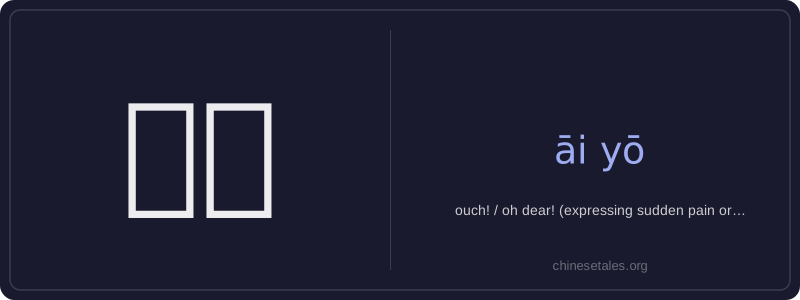
‘Āi yō’ is an interjection used to express sudden, mild physical pain or emotional surprise—similar to English ‘Ouch!’ or ‘Oh dear!’. Though written with two characters, it functions as a single unit and is never split in speech. The first character 哎 (āi) often signals attention or reaction, while 哟 (yō) adds emotional emphasis; together they form an inseparable exclamatory phrase. It’s informal and conversational, commonly heard in everyday speech, dramas, or casual writing.
This expression carries no literal meaning beyond its emotive function—it’s not a noun, verb, or descriptive word. It’s frequently used when stubbing a toe, dropping something unexpectedly, or reacting to minor mishaps or surprising news. Tone is crucial: it’s always pronounced with first tone on āi and second tone on yō; mispronouncing the tones may make it sound unnatural or confusing to native speakers.
Example Sentences
Related Words
国语
‘Guó yǔ’ literally means 'national language'—
无论谁
‘无论谁’ (wú lùn shéi) is a pronoun meaning
外语
‘外语’ literally means ‘outside language’ —
面条
‘面条’ (miàn tiáo) literally means ‘flour str
不对
不对 (bù duì) literally combines 不 (bù), meani
认为
‘认为’ (rèn wéi) is a transitive verb meaning
认同
‘认同’ (tóng rèn) is a verb meaning ‘to ident
中学
'Zhōngxué' literally combines 'zhōng' (middle)